
Alexandria on the Tigris: Alexander’s Lost City Found
The Port Alexander Built for Trade, Not War
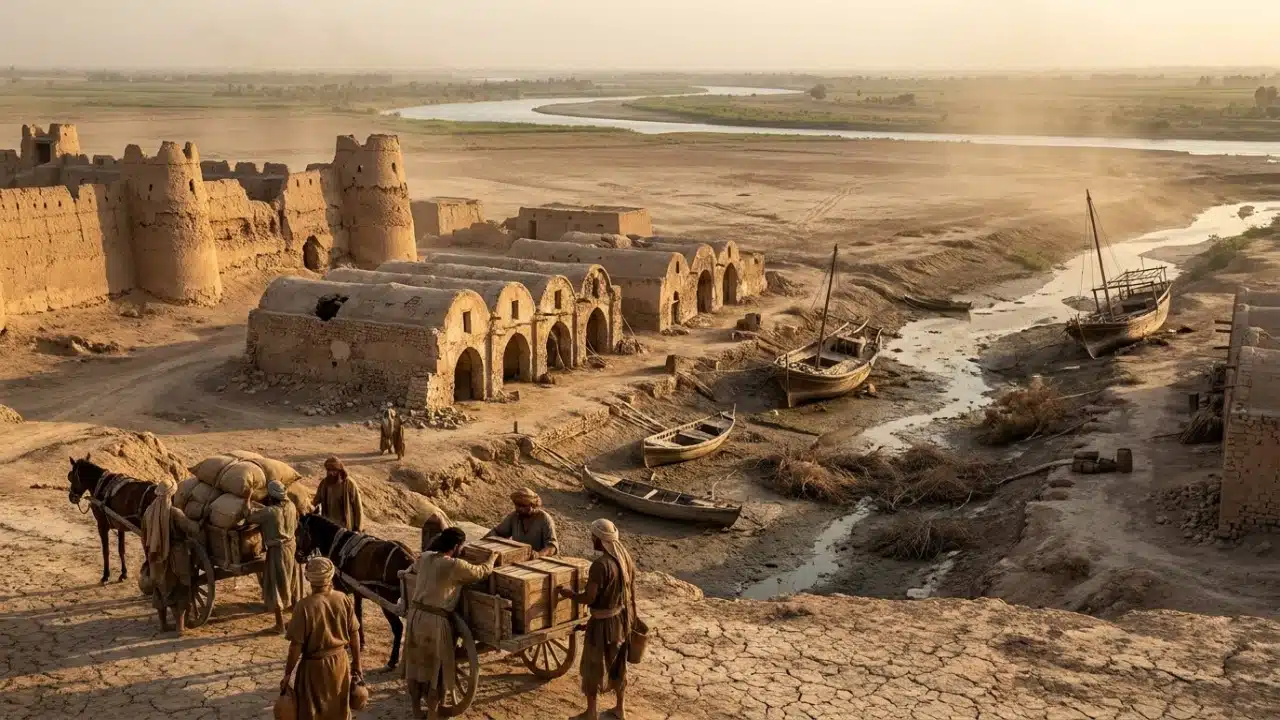
In 324 BCE, Alexander the Great came back from India with an empire that stretched from Greece to the Indus and no great harbor to hold it together.
A year before his death, he fixed that. He founded a port where the Tigris met the rivers running down to the Persian Gulf. Its name was Alexandria on the Tigris.
Then the river moved, and the city lost its reason to exist. In 2026, an international team led by archaeologist Stefan Hauser confirmed where it stood and how big it was. Alexandria on the Tigris was no minor outpost. It was a planned metropolis.
Short answer: Alexandria on the Tigris was a port founded by Alexander the Great around 324 BCE at Jebel Khayyaber in southern Iraq. Later called Charax Spasinou, it was mapped in 2026 by a team led by Stefan Hauser. The Tigris shifted away, and the city was largely abandoned by the third century CE.
Key Takeaways
- Alexandria on the Tigris was founded around 324 BCE as a port for trade with India.
- It was later called Antiochia, then Charax Spasinou, and became the capital of the kingdom of Characene.
- Surveys reveal a planned city with huge residential blocks, temples, workshops, and canals.
- The Tigris moved away, and the city was largely abandoned by the third century CE.
- Most evidence so far comes from surveys, not large excavations, so many questions remain open.
Where Is Alexandria on the Tigris?
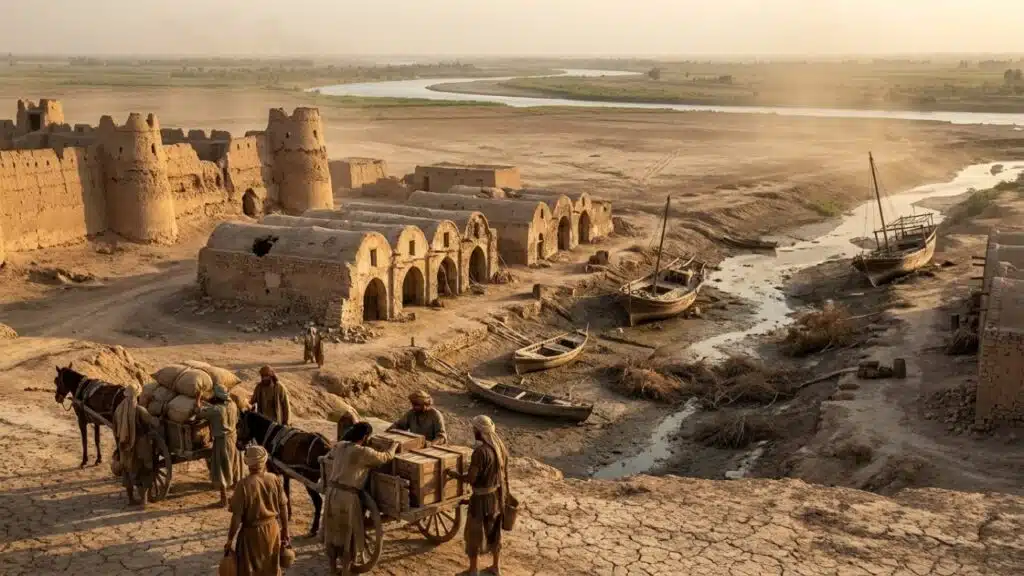
The ruins lie at Jebel Khayyaber in southern Iraq, near the city of Basra.
From above, the site is a vast enclosure. Its fortification walls rise about 26 feet above the plain, according to Earth.com’s 2026 report.
In antiquity, the spot sat near the meeting of the Tigris and the Eulaeus, the river that ran down from Susa. That made it a natural gateway between the Persian Gulf and Mesopotamia.
Today the river is nowhere near. That absence is the heart of the story.
Who Founded Alexandria on the Tigris, and Why?
Ancient sources say Alexander founded a strategic new port when he returned to Mesopotamia from the Indus Valley around 324 BCE. Pliny the Elder, writing in the first century CE, credits him too.
Alexander founded many cities named Alexandria. The famous one sits on the Egyptian coast, home to the Library of Alexandria. This one had a different job.
Hauser, a professor at the University of Konstanz, describes it as a port and distribution center for trade with India. Ships from the Gulf could meet river traffic heading north.
It was a logistics decision. Control the water, and you control the trade.
Whether Alexander personally laid out the city is debated. Ancient tradition credits him, but the sources do not settle it.
What Names Did Alexandria on the Tigris Have?
The city was rebuilt and renamed so often that its story reads best as a timeline.
- About 324 BCE: Alexander founds Alexandria on the Tigris.
- Later: Floods destroy the city, according to Pliny.
- 166 to 165 BCE: The Seleucid king Antiochus IV rebuilds it as Antiochia and appoints Hyspaosines as governor.
- Later: Floods strike again. Hyspaosines raises a new embankment, which Pliny measures at nearly two miles, and the city becomes Charax Spasinou, “the palisade of Hyspaosines”.
- 124 BCE: Hyspaosines, now ruling the kingdom of Characene, accepts Parthian overlordship.
- 222 CE: The Sasanian Empire absorbs Characene.
- Third century CE: The city is largely abandoned as the Tigris drifts away.
The same city, then, lived under at least three names and four rulers.
What Did Archaeologists Find at Alexandria on the Tigris?
For decades, conflict in Iraq blocked fieldwork. In 2016, the Charax Spasinou Project began, bringing together the University of Manchester, the University of Konstanz and the Iraqi State Board of Antiquities and Heritage.
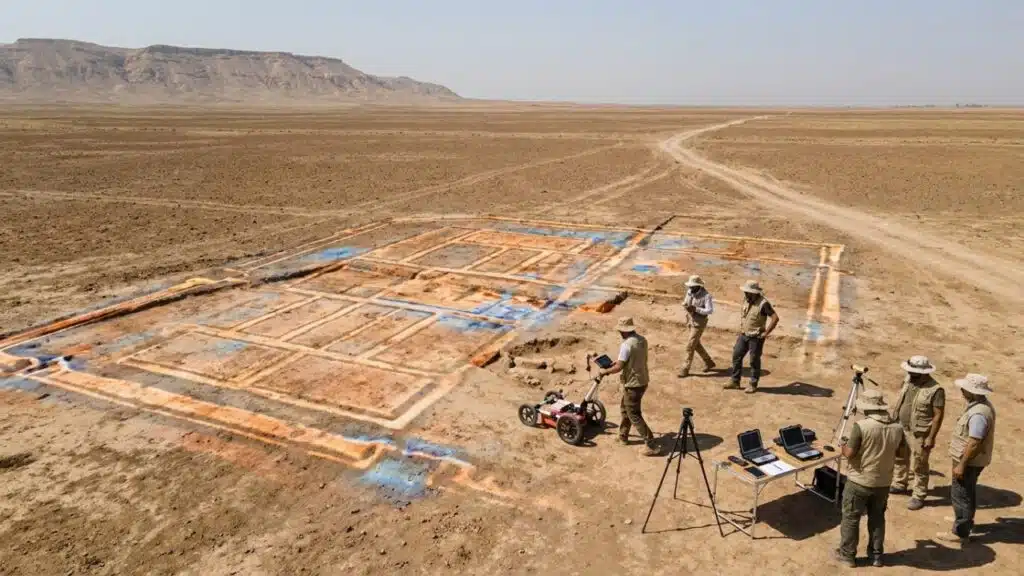
Instead of digging trenches everywhere, the team mapped the site from the surface. They used aerial photography, drone imagery and surface surveys. Jörg Fassbinder’s team added a cesium magnetometer, which reads tiny magnetic changes underground.
The maps revealed an organized network of streets, walls, canals and city blocks. Archaeology Magazine reports that the residential blocks are among the largest found anywhere in the ancient world.
The surveys also detected:
- Temple precincts beside large residential blocks.
- Workshops clustered next to an inner canal and river port.
- A palatial compound set apart from the nearby streets.
- Irrigated fields beyond the northern edge of the city.
More than a mile south of the north wall, streets still run parallel to it. That points to a master plan.
But four different alignments in the buried layout show the city was rebuilt and repurposed more than once.
Hauser said the team realized they were looking at the equivalent of Alexandria on the Nile.
Why Was Alexandria on the Tigris So Important?
Because it moved goods between worlds. Archaeology Magazine reports that between 300 BCE and 300 CE the city grew into a major trade center linking Mesopotamia, India, Afghanistan and China.
For at least 550 years, according to Earth.com, the port fed Mesopotamian capitals with spices, exotic woods, stones, textiles and silk. Its customers were local markets in Seleucia, Ctesiphon and Susa.
That changes an old picture. Textbooks often describe east-west trade as a story about Rome and China, with everyone in between merely passing goods along.
Alexandria on the Tigris shows the middle managing the trade. A kingdom acted as a market, a political center, and a gatekeeper.
It echoes the Egyptian port of Heracleion, the sunken city of Egypt that made every Greek ship stop before entering the country. Gateway cities always held more power than their size suggested.
And it sat in Mesopotamia, the land of Babylon and its famous Hanging Gardens of Babylon, where rivers made and unmade fortunes.
Why Did Alexandria on the Tigris Disappear?
The same river that built it took it away.
Hauser stresses that the city depended on the river to serve its purpose. Silt kept pushing the coastline south, and the Tigris drifted west. Ships could no longer reach the old port easily.
By the third century CE, the settlement was largely abandoned. Earth.com concludes that environmental change, not a single dramatic conquest, ended the system that sustained the metropolis.
There is a bitter irony here. According to Pliny, floods destroyed the city twice. In the end, it was not too much water that finished it, but too little.
Was Alexandria on the Tigris Really Lost?
Not in the way the headlines suggest.
The site was not buried in a distant jungle. Its walls rise above the plain. Earth.com notes that the first campaign in 2016 made archaeologist John Hansman’s old hunch persuasive. The layout and defenses also reminded Hauser of Pliny’s description of the city.
What was missing was proof and a map. The 2026 reports describe the location as confirmed and the layout as mapped.
So when you read “lost city found,” read it as “identified and surveyed.” That is still a major result. It simply is not a treasure hunter’s story.
What Is Still Unknown About Alexandria on the Tigris?
A great deal. Earth.com stresses that much of the argument rests on surface evidence, buried plans,s and limited trenches, not large excavations.
Open questions include:
- Which parts of the city date to Alexander’s founding and which to later rebuilds.
- How ordinary people lived inside the residential blocks.
- How the temples, kilns and storehouses worked together.
- When the harbor shifted south, and how residents adapted before leaving.
Magnetic maps can suggest what lies underground. Only excavation can test it.
Alexandria on the Tigris: Quick Answers
Where is Alexandria on the Tigris?
At Jebel Khayyaber in southern Iraq, near Basra. Its walls still rise about 26 feet above the plain.
Who founded Alexandria on the Tigris?
Ancient sources credit Alexander the Great, around 324 BCE. Whether he personally laid it out is debated.
Why is Alexandria on the Tigris also called Charax Spasinou?
After floods, the city was rebuilt and renamed. Charax Spasinou means “the palisade of Hyspaosines”, after the governor who raised its embankment and later ruled Characene.
Why was Alexandria on the Tigris abandoned?
The Tigris shifted away, and silt pushed the coast south, cutting the port off from ships. By the third century CE it was largely abandoned.
Has Alexandria on the Tigris been excavated?
Only in limited trenches so far. Most knowledge comes from aerial images, surface surveys, and magnetometer mapping.
Is Alexandria on the Tigris the same as Alexandria in Egypt?
No. Alexander founded many cities named Alexandria. This one is in Iraq, and its job was trade with India.
Conclusion: The City the River Gave and Took
Alexandria on the Tigris is a reminder that empires run on logistics. Alexander is remembered for battles, but one of his most important decisions was a harbor.
For more than five centuries, that port fed cities, linked India to Mesopotamia and gave a kingdom its capital. Then the Tigris moved, and the metropolis faded.
Now the street plan is visible again. Alexandria on the Tigris is not a mystery of sand and treasure. It is a case study in how a city lives and dies by a river.
And beneath those 26-foot walls, the hardest questions are still waiting for the first big trench.
Sources
- Archaeology Magazine (February 10, 2026): Jason Urbanus, “New Research Confirms Location of Lost City Founded by Alexander the Great.” archaeology.org
- Earth.com (April 7, 2026): Raquel Brandao, “Archaeologists confirm discovery of the legendary lost city Alexandria on the Tigris.” earth.com
- University of Konstanz: “Alexandria on the Tigris: the forgotten metropolis” (Stefan Hauser, Charax Spasinou Project). campus.uni-konstanz.de
- Encyclopaedia Iranica: “Characene and Charax (Spasinou) in pre-Islamic times” (Pliny on floods, Antiochus IV, Hyspaosines). iranicaonline.org
- Leiden University repository (2019): Lambers, Fassbinder, Campbell and Hauser, “Ancient Charax Spasinou (Iraq): Interpreting a multi-phase city.” scholarlypublications.universiteitleiden.nl
- Wikipedia: “Charax Spasinu,” “Hyspaosines,” “Characene,” and “Sagdodonacus” (name changes, 124 BCE Parthian suzerainty, Sasanian absorption in 222 CE). en.wikipedia.org
- Primary source for verification: Pliny the Elder, Natural History, Book 6, sections 138 and 139 (Alexander’s foundation, the floods, Antiochus and Hyspaosines).
Watch this video about it:
If you are intrested more here is the video about Alexander’s Lost City . Below is the video for you.