
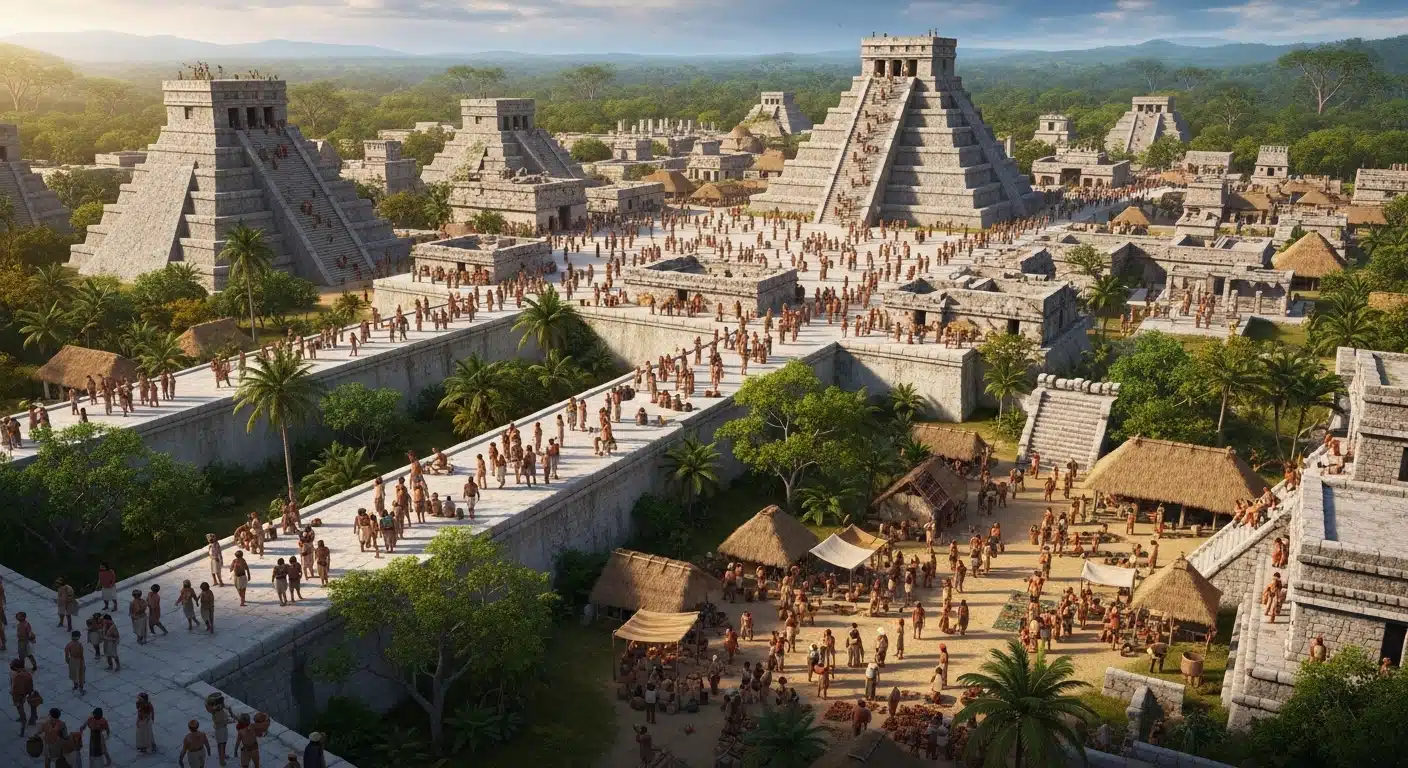
Campeche Mayan Discovery Reveals Hidden Ancient City
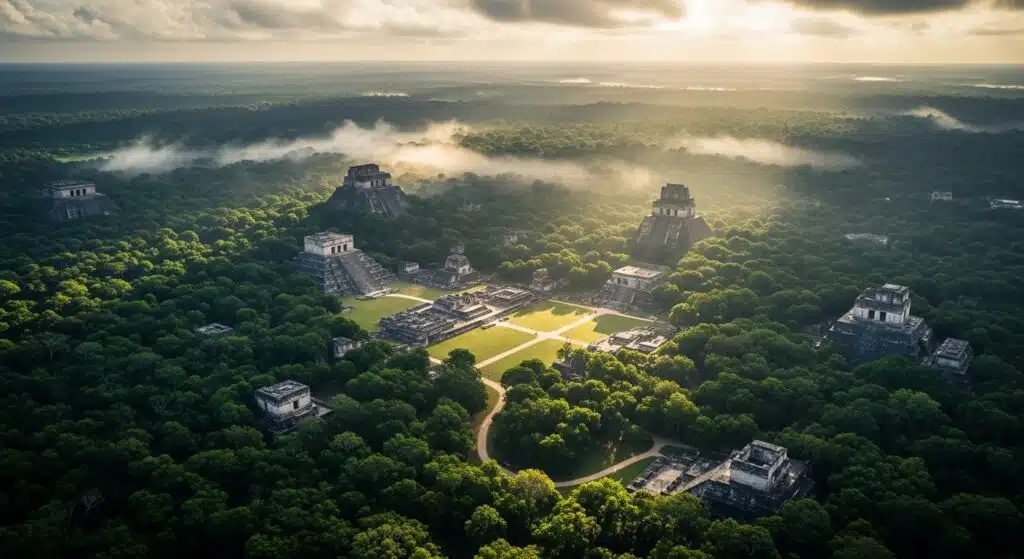
Campeche Mayan Discovery Reveals a Hidden City of 30,000
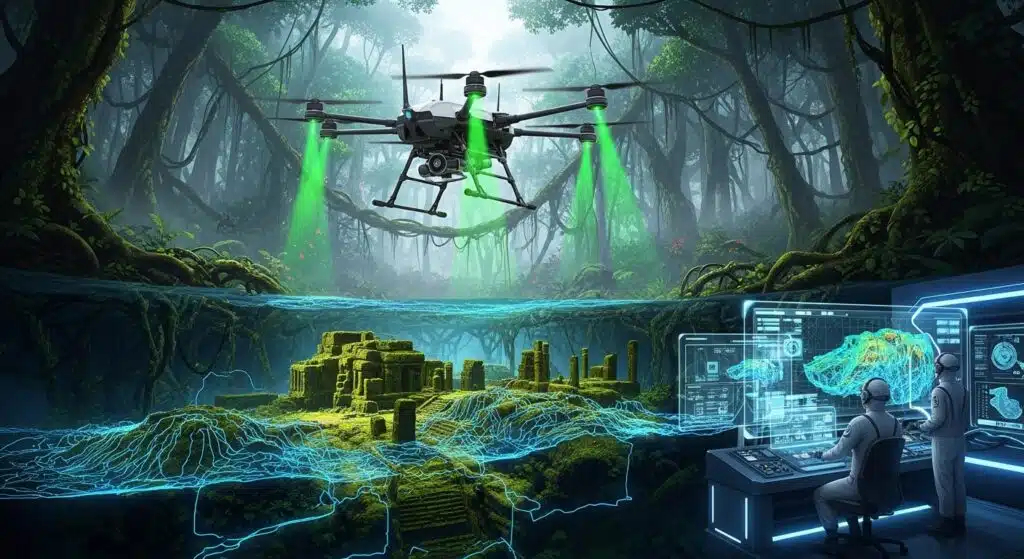
Campeche Mayan Discovery has stunned archaeologists and historians alike, revealing a vast ancient city hidden beneath the dense jungles of southeastern Mexico. What began as a routine LiDAR scan unexpectedly exposed an entire urban landscape complete with pyramids, roads, reservoirs, and residential zones—suggesting that as many as 30,000 people once lived there.
This accidental discovery is now being compared to some of the greatest breakthroughs in Maya archaeology, offering a new perspective on how large and interconnected ancient Maya civilization truly was.
A Discovery Hidden Beneath the Jungle
The newly identified city lies in the state of Campeche, a region already known for its rich concentration of Maya ruins. However, unlike famous sites such as Chichén Itzá or Tikal, this city remained completely hidden under thick forest canopy for centuries.
The breakthrough came through LiDAR (Light Detection and Ranging) technology. By sending laser pulses from aircraft and measuring how they reflect off the ground, LiDAR can effectively “see through” vegetation and map structures buried beneath.
When researchers analyzed the scan data, they realized they were not looking at isolated ruins—but a fully developed urban center.
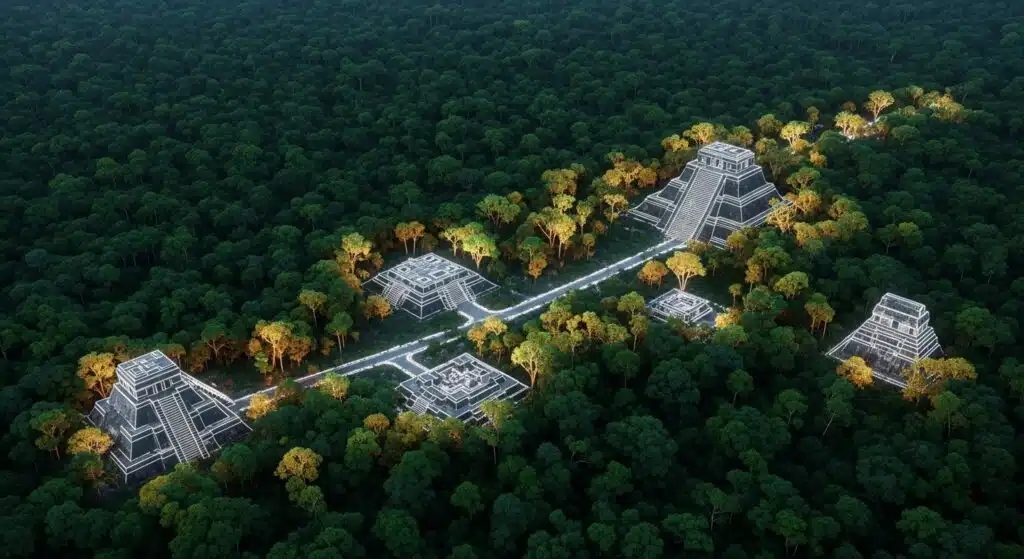
A City That Was Never Supposed to Be Found
What makes the Campeche Mayan Discovery particularly fascinating is that it was not initially the main target of the survey. Archaeologists were scanning the region to better understand known Maya settlements when unexpected geometric patterns began to appear in the data.
These patterns revealed:
- Large pyramidal structures
- Extensive road networks (sacbeob)
- Defensive walls and terraces
- Agricultural fields and water reservoirs
- Dense residential clusters
The scale of the site suggested a population of tens of thousands—far larger than many previously documented cities in the region.
This was not a minor outpost.
It was a major urban hub.
Life in the Hidden City
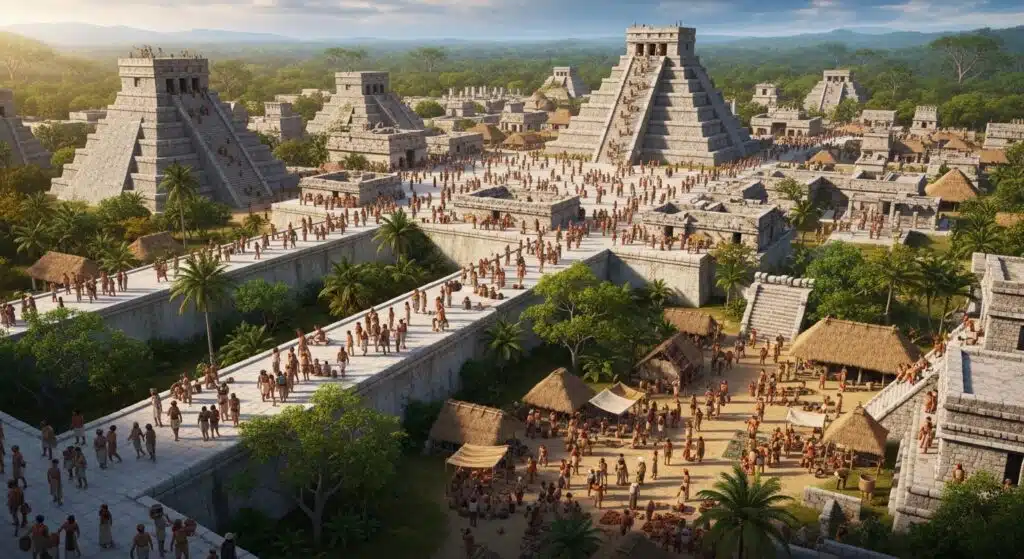
The layout of the city provides important clues about how its inhabitants lived. At its center stood ceremonial complexes with pyramids and plazas, likely used for religious rituals and political gatherings.
Surrounding these were residential areas, where ordinary people lived in smaller structures made of stone and perishable materials.
The presence of reservoirs and irrigation systems indicates advanced water management—essential for surviving in a region with seasonal rainfall.
The road network connected different parts of the city and likely linked it to other Maya centers, showing that this settlement was part of a broader regional system.
The Campeche Mayan Discovery reinforces the idea that Maya civilization was not made up of isolated cities, but of interconnected urban networks.
The Power of LiDAR in Maya Archaeology
LiDAR technology has revolutionized the study of the ancient Maya over the past decade. In 2018, large-scale LiDAR surveys in Guatemala revealed tens of thousands of previously unknown structures around Tikal, fundamentally changing estimates of Maya population and urbanization.
The Campeche discovery builds on this momentum.
It demonstrates that even in regions already studied for decades, entire cities can still remain hidden beneath vegetation.
Without LiDAR, uncovering such a site would have taken decades of manual clearing and excavation.
With it, archaeologists can map entire landscapes in a matter of days.
Rethinking Maya Population and Complexity
For much of the 20th century, scholars believed that Maya cities were relatively small and sparsely populated. However, discoveries like this are forcing a complete reassessment.
The Campeche Mayan Discovery suggests that:
- Maya cities could support large populations
- Urban planning was more sophisticated than previously thought
- Infrastructure such as roads and reservoirs was widespread
- Political and economic systems were highly organized
A population of 30,000 would have required coordinated food production, governance, and trade networks.
This level of complexity places the Maya on par with other great ancient civilizations in terms of urban development.
Why Was the City Abandoned?
Like many Maya cities, this newly discovered settlement was eventually abandoned. While the exact reasons remain unclear, researchers point to several possible factors:
- Environmental stress, including droughts and deforestation
- Political instability or warfare
- Resource depletion
- Shifts in trade routes
The broader collapse of Classic Maya civilization around the 8th and 9th centuries CE affected many cities across the region.
The Campeche site may have been part of this larger pattern of decline.
A Civilization Still Revealing Its Secrets
One of the most striking aspects of the Campeche Mayan Discovery is how much remains unknown. The site has only just been identified, and detailed excavation work is still in its early stages.
Future research may uncover:
- Inscriptions revealing the city’s original name
- Artifacts that shed light on trade and daily life
- Burial sites that provide insight into social hierarchy
- Connections to other major Maya centers
Each new discovery has the potential to reshape our understanding of Maya civilization even further.
Why This Discovery Matters Today
The Campeche Mayan Discovery is more than just an archaeological headline. It is a reminder that history is still being uncovered—and that even well-studied regions can hold extraordinary surprises.
It also highlights the importance of protecting these sites. Many hidden ruins are threatened by deforestation, looting, and modern development before they can be properly studied.
By combining modern technology with careful research, archaeologists are not just uncovering ancient cities—they are preserving human history.
The Jungle Still Holds More Cities
If one hidden city of 30,000 people can remain undetected until now, it raises an exciting possibility:
How many more are still out there?
The jungles of Mexico and Central America may still conceal entire civilizations waiting to be revealed.
The story of the Maya is far from complete.
And thanks to discoveries like this, we are only just beginning to see its true scale.
Explore the Hidden Inca Underworld
Beneath the ancient city of Cusco, new technology is uncovering a mysterious underground tunnel network linked to Inca legends.
Read next:
https://antiqueechoes.com/cusco-tunnels-gpr-inca-underground-labyrinth-discovery