Karahantepe Structure Reveals Neolithic Ritual Gathering Site
Karahantepe Structure Reveals Neolithic Ritual Gathering Site
Karahantepe Structure has become one of the most fascinating archaeological discoveries in recent years, offering a rare glimpse into how human societies organized rituals and gatherings thousands of years before the rise of agriculture and cities. Located in southeastern Turkey, the site of Karahantepe forms part of the broader Taş Tepeler archaeological region, which also includes the world-famous site of Göbekli Tepe.
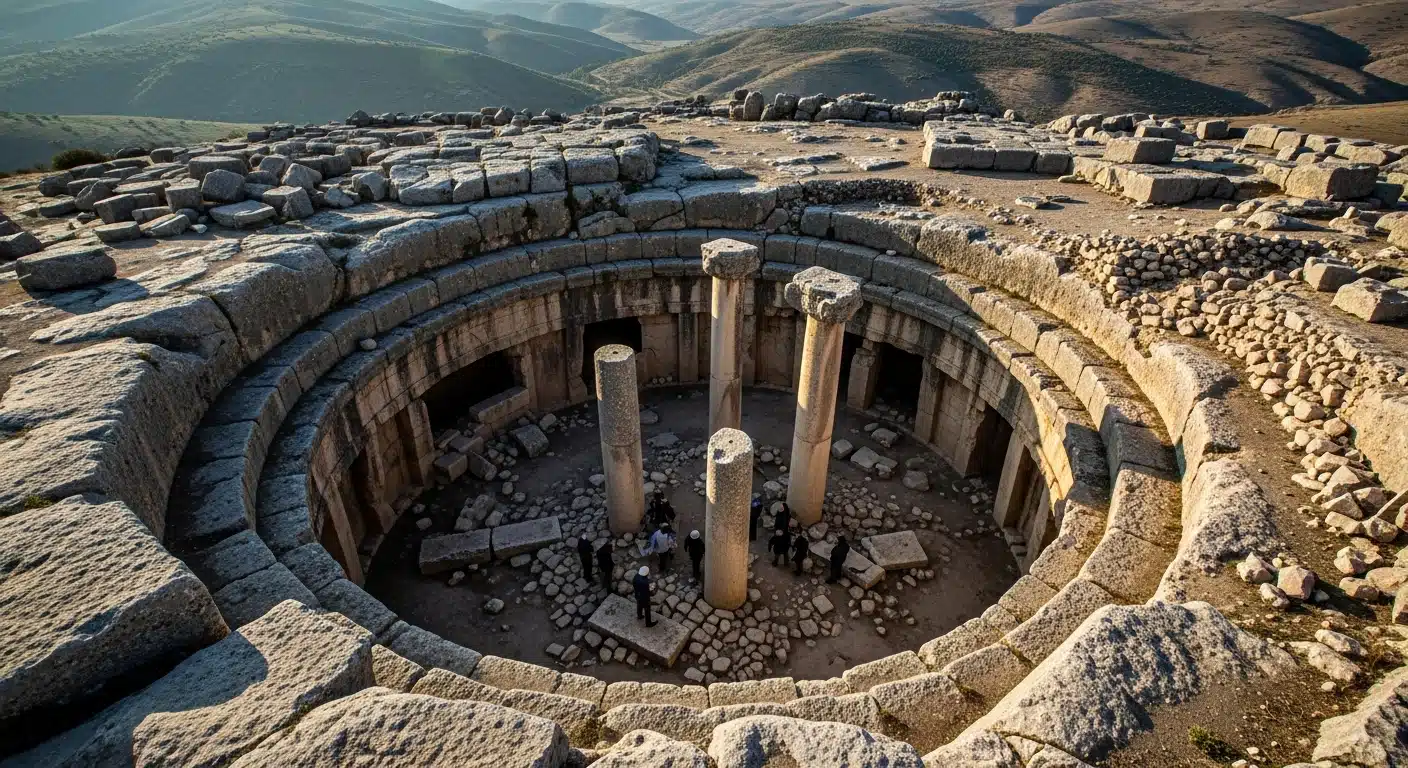
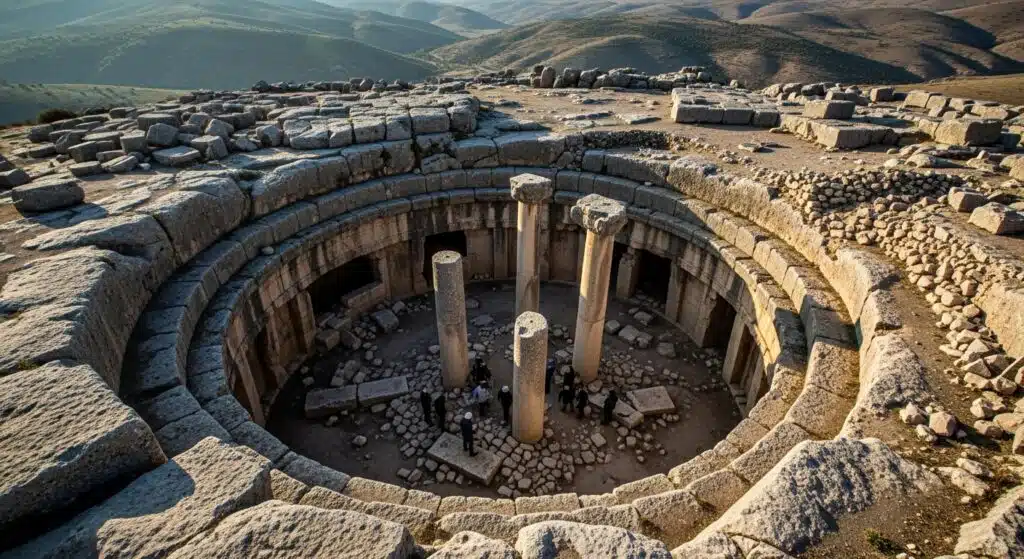
What makes Karahantepe extraordinary is the discovery of a large circular sunken space that many researchers describe as resembling an early amphitheater-like structure—a communal gathering place dating back more than 11,000 years, to a time when humans were still primarily hunter-gatherers.
This finding suggests that organized ritual gatherings may have played a crucial role in shaping early human communities possibly even before the development of agriculture itself.
A Find Beneath Southeastern Turkey’s Hills
About 35 kilometers east of the present-day city of Şanlıurfa is Karahantepe. Although the site was first discovered by archaeologists decades ago, systematic excavations started in 2019 as part of Turkey’s Taş Tepeler Project, a massive research project looking at early Neolithic communities throughout the region.
According to preliminary assessments, hundreds of T-shaped limestone pillars resembling those at Göbekli Tepe emerged from the slope. However, further excavation uncovered something unique: a deep circular chamber carved directly into bedrock, containing carved stone pillars and benches arranged around the interior.
This area probably had a ritual or community purpose, bringing people together for rituals, get-togethers, and possibly religious events, in contrast to later theaters constructed for entertainment in ancient Greece or Rome.
The Amphitheater-Like Chamber
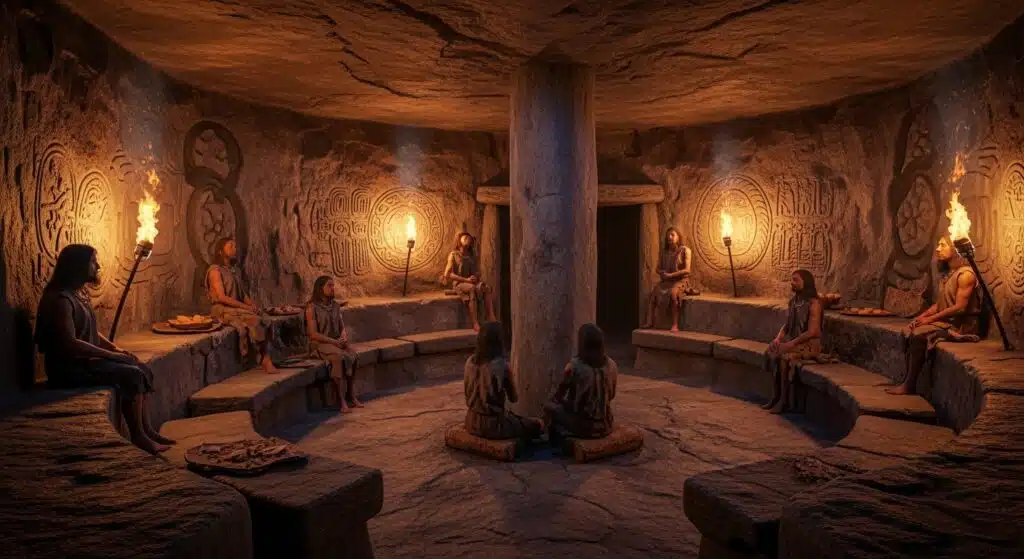
The central Karahantepe Structure is a sunken circular room approximately 23 feet (7 meters) in diameter, cut directly into the limestone bedrock. Around its walls are stone seating platforms that form a ring, suggesting that people could sit or stand while observing activities in the center.
In the middle of the chamber stands a carved stone pillar, surrounded by smaller pillars embedded into the walls.
One particularly striking feature is a carved human head emerging from the stone, which archaeologists believe may represent a symbolic or ritual figure connected to the site’s ceremonies.
There is no indication of cooking, storage, or occupancy in the chamber, in contrast to common home settings. Rather, it is clear from the design that this building was used for social gatherings or ceremonies.
The design creates the illusion of a community meeting place, which is astonishingly advanced for a population that had not yet mastered agriculture.
Ritual Before Farming?
The discovery of the Karahantepe Structure adds to a growing archaeological debate about the origins of civilization. For much of the twentieth century, historians believed that agriculture came first, followed by permanent settlements and organized religion.
However, discoveries at Karahantepe and Göbekli Tepe challenge that traditional model.
Radiocarbon dating indicates that these sites were built around 9500–9000 BCE, during the Pre-Pottery Neolithic period—long before widespread farming appeared in the region.
This has led some archaeologists to propose a revolutionary idea:
Large ritual gatherings may have helped drive the development of agriculture rather than the other way around.
If groups of hunter-gatherers gathered regularly for ceremonies, they would have needed reliable food supplies to support these events. Over time, this pressure could have encouraged experimentation with plant cultivation and animal domestication.
In other words, religion and social rituals may have been the spark that eventually led to farming.
The Cultural Network of Taş Tepeler
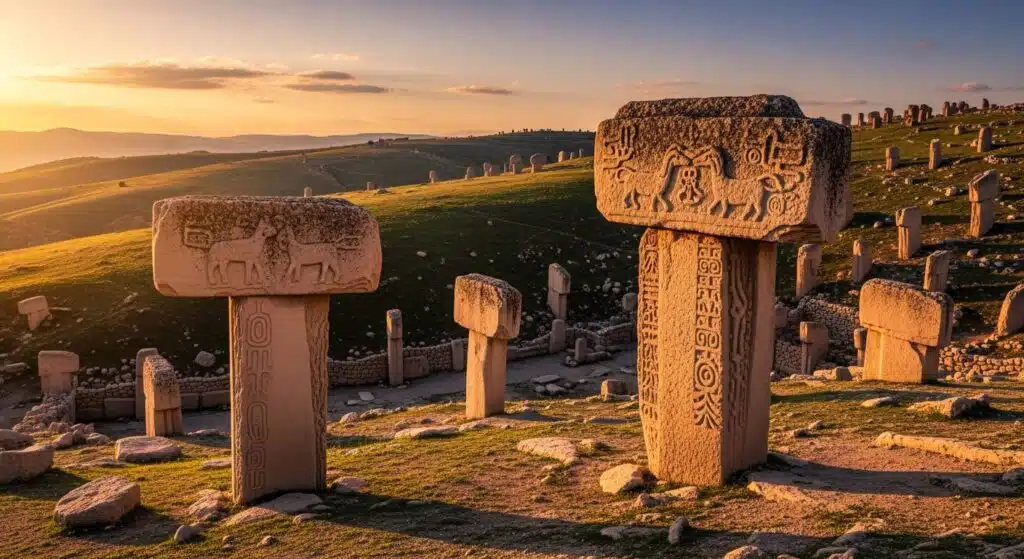
Karahantepe is not a remote location. Taş Tepeler, which translates as “Stone Hills” in Turkish, is a bigger network of early Neolithic sites.
Numerous prehistoric monuments with colossal architecture and stone carvings may be found throughout southeast Turkey as part of this cultural environment.
According to researchers, these communities were linked by common customs, trade, and seasonal get-togethers.
With its enormous stone pillars adorned with sculptures of creatures like foxes, snakes, and birds, Göbekli Tepe continues to be the most well-known example. Despite having its own distinctive architectural style, Karahantepe seems to be part of the same cultural environment.
When taken as a whole, these locations imply that long before cities formed, early humans in this area were experimenting with intricate social structures.
Human Identity and Symbolism
The Karahantepe Structure’s human imagery carved into the stone is one of its most fascinating features.
Karahantepe boasts a number of sculptures that seem to depict human faces or figures, in contrast to Göbekli Tepe, which focuses on animals.
A changing cultural emphasis on human identity, leadership, or spiritual authority rather than the natural environment may be reflected in this change in symbolism.
According to some experts, the amphitheater-like space might have been used for storytelling events, initiation rites, or seasonal get-togethers where locals shared customs and tales.
The architectural design unmistakably depicts a location intended for group experience, even though the precise function is yet unknown.
A Window into the Birth of Society
The Karahantepe Structure represents one of the earliest known examples of monumental architecture created by hunter-gatherers. It demonstrates that organized social gatherings, rituals, and symbolic expression existed long before agriculture transformed human life.
Rather than simple bands of nomadic hunters, these communities appear to have been capable of coordinated construction projects, shared belief systems, and complex social interaction.
In this sense, Karahantepe provides a window into a pivotal moment in human history—the transition from small mobile groups to larger societies capable of building the first sacred spaces.
Rewriting Early Human History
As excavations continue across the Taş Tepeler region, archaeologists expect many more discoveries that will reshape our understanding of the Neolithic world.
Sites like Karahantepe demonstrate that the origins of civilization may lie not only in farming and cities but also in shared rituals, storytelling, and communal identity.
Long before temples, kingdoms, or empires existed, humans were already gathering in carefully designed spaces to celebrate beliefs, strengthen bonds, and explore what it meant to live together.
The Karahantepe Structure stands as one of the earliest physical reminders of that deeply human impulse.
Discover a Lost Silk Road Metropolis
Another recent discovery is rewriting Central Asian history — the lost iron city of Marsmanda Uzbekistan, a high-altitude Silk Road industrial center uncovered with LiDAR.
Read next:
https://antiqueechoes.com/marsmanda-uzbekistan-lost-iron-city-silk-road-metropolis
Click Below To Watch Full Story