Cusco Tunnels GPR Reveals Inca Underground Labyrinth
Cusco Tunnels GPR research has revived one of the most fascinating legends of the Inca world: the existence of a hidden underground labyrinth beneath the ancient capital of Cusco. For centuries, local traditions and colonial chronicles described mysterious tunnels connecting temples, fortresses, and royal palaces across the city. Many historians once dismissed these stories as myths or exaggerations.
But modern technology is beginning to confirm that the legends may contain more truth than previously believed.
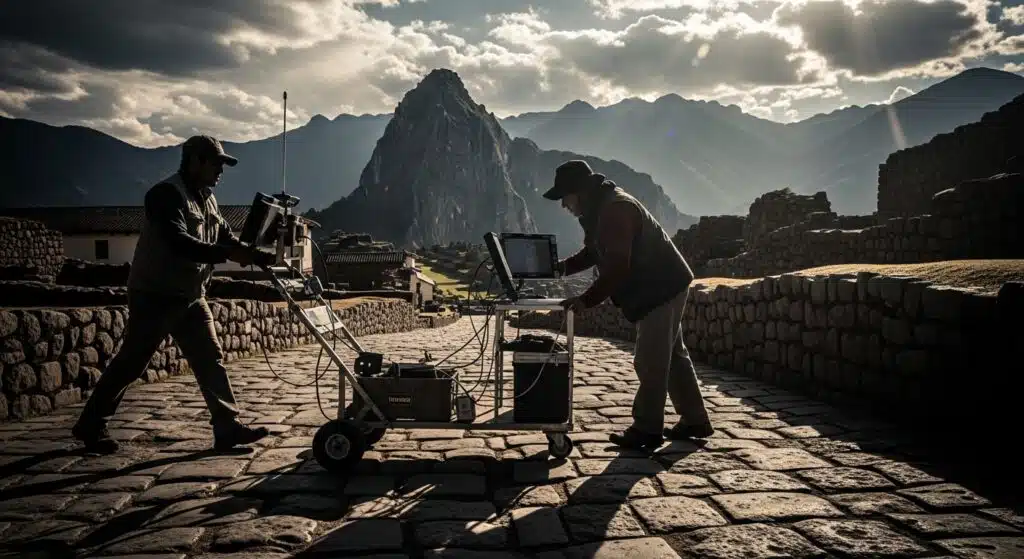
Using Ground Penetrating Radar (GPR) and geophysical surveys, researchers have detected an extensive network of underground cavities and corridors beneath parts of Cusco’s historic center. These findings suggest that the Inca may indeed have built a complex subterranean infrastructure—one that possibly served ceremonial, defensive, or symbolic purposes.
Legends from antiquity about the Inca “Underworld”
There have been tales of subterranean tunnels in Cusco since the early days of Spanish colonization. Historians like Pedro Cieza de León and Garcilaso de la Vega described underground passageways that linked significant political and religious sites.
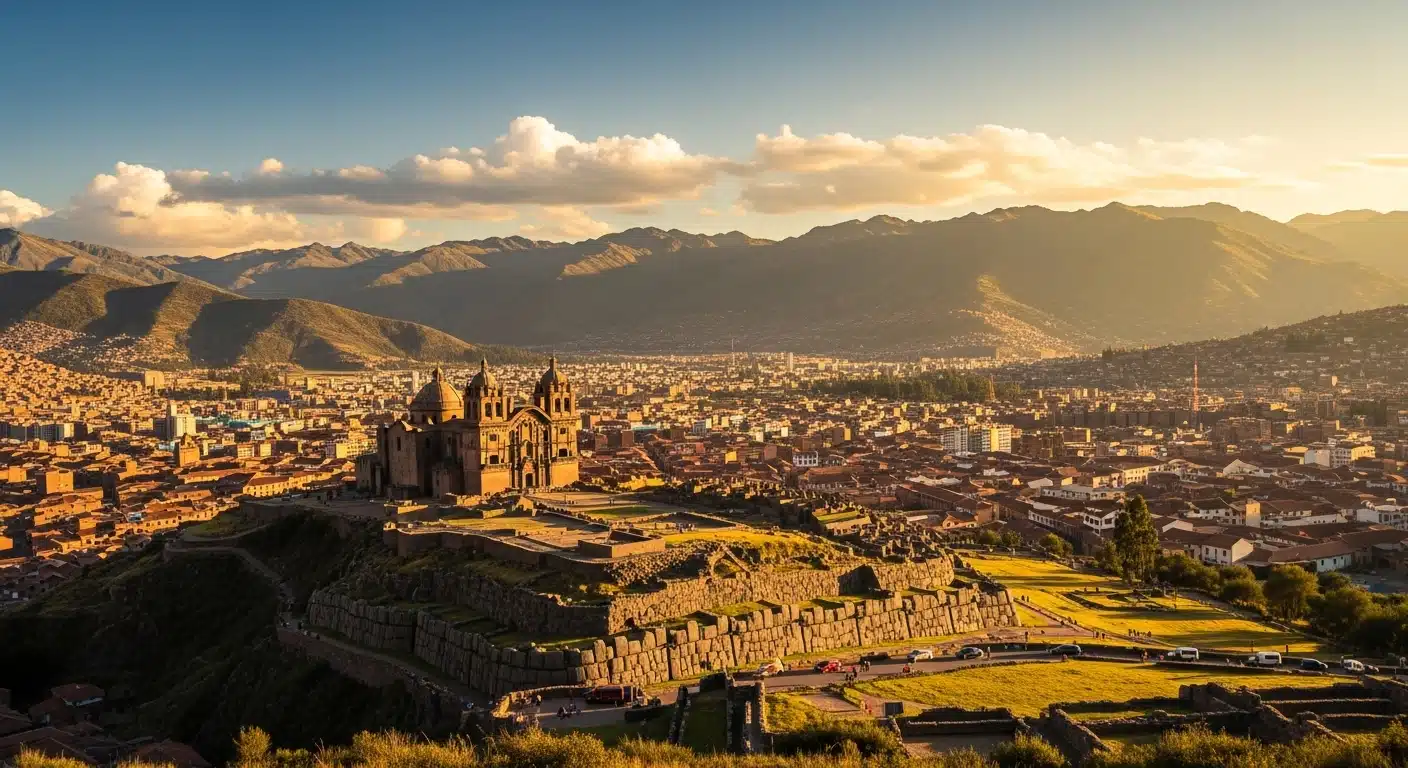
One of the most well-known traditions was of a tunnel connecting the enormous castle of Sacsayhuamán on the hill above the city with the Temple of the Sun, also known as Coricancha.
These tunnels were sometimes called “chincanas,” a Quechua word that translates to “labyrinth” or “place where one gets lost,” according to historical reports.
Although several of these tubes ultimately collapsed or were shut, some explorers even claimed to have entered them during the colonial era.
For centuries, however, physical proof remained elusive
Ground Penetrating Radar Changes the Picture
Recent research using Ground Penetrating Radar (GPR) has provided new clues about what lies beneath Cusco. GPR works by sending radar waves into the ground and measuring how they bounce back from buried structures, cavities, or changes in soil composition.
When archaeologists conducted surveys around the historic center of Cusco, the scans revealed anomalies consistent with large underground voids and corridors.
These results suggest that beneath streets and buildings constructed during the Spanish colonial period lie earlier structures from the Inca city.
In some locations, the radar images show linear shapes that strongly resemble man-made tunnels, supporting long-standing historical descriptions.
The Tunnel Network’s Potential Path
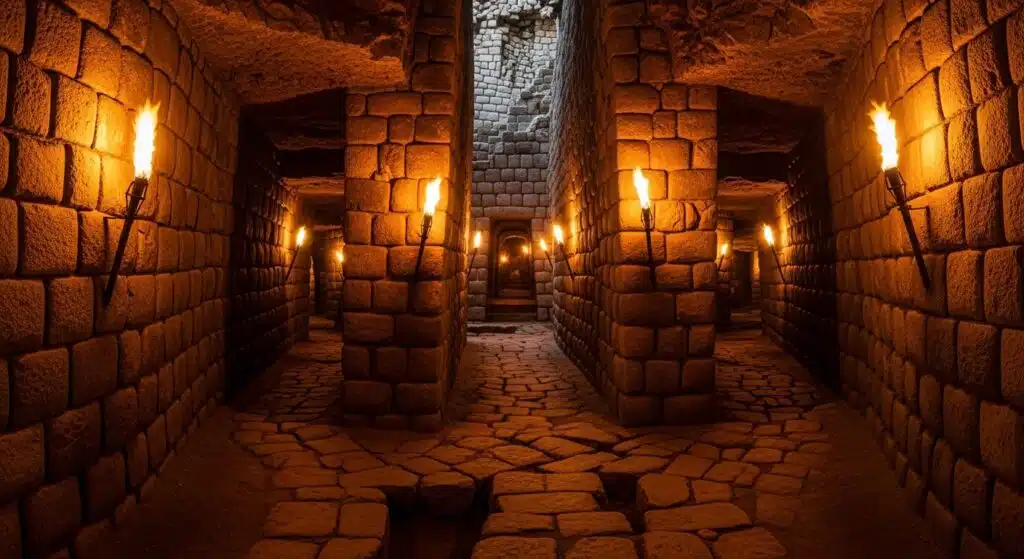
A tunnel system that would run around two kilometers between Coricancha and Sacsayhuamán is one of the most talked-about options.
If verified, such a tunnel would have taken exceptional engineering expertise, especially considering the area’s rugged terrain and seismic activity.
The Incas were already renowned for their exceptional hydraulic engineering and stonework. Their cities had earthquake-resistant water channels, terraces, and meticulously planned drainage systems.
They would not have been incapable of building an underground passageway linking political and religious hubs.
Researchers warn that in order to determine the precise nature of many radar abnormalities, excavation is still necessary.
Why the Inca Might Have Built Underground Passages
If these tunnels were indeed constructed by the Inca, they may have served several possible purposes.
Religious Symbolism
In Inca cosmology, the world was divided into three realms:
- Hanan Pacha – the upper world of the gods
- Kay Pacha – the earthly world of humans
- Ukhu Pacha – the inner or underground world
Subterranean tunnels could have symbolized a physical connection to Ukhu Pacha, the spiritual realm associated with ancestors and sacred transformation.
Political and Strategic Use
Tunnels might also have allowed rulers or priests to move secretly between key locations during ceremonies or conflicts. A hidden passage linking temples and fortresses would have offered both security and symbolic power.
Ritual Pilgrimage
Another theory suggests that these underground routes were part of ceremonial journeys used during religious festivals, guiding participants through symbolic spaces representing different layers of the cosmos.
Archaeology Beneath a Living City
One major challenge facing archaeologists is that modern Cusco is a living city, with streets, homes, and colonial buildings built directly over the ancient Inca capital.
Large-scale excavation beneath the historic center is extremely difficult and potentially dangerous.
Because of this, technologies like GPR scanning, seismic imaging, and micro-robotic exploration have become essential tools for studying what lies underground without damaging existing structures.
Future research may involve inserting small cameras or sensors into narrow openings to map tunnels more precisely.
The Mystery of the Chincanas
The chincanas of Cusco remain one of the most intriguing puzzles in Andean archaeology.
Some passages have been partially documented in the past. For example, explorers have reported narrow tunnels near Sacsayhuamán that descend into dark chambers before abruptly ending in collapsed sections.
However, it is unclear whether these spaces were part of a larger network or isolated structures.
The new Cusco Tunnels GPR findings suggest that far more may exist than previously suspected.
An Undiscovered Aspect of Inca Culture
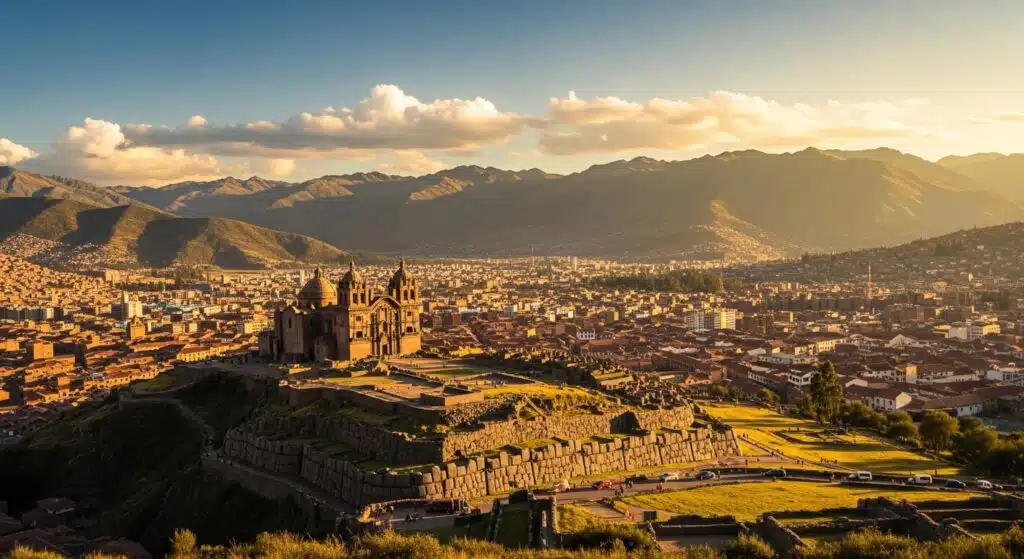
In the past, Cusco served as the capital of the enormous Inca Empire, which covered a large portion of western South America. Its roadways, plazas, and temples served as the hub of both political and religious activity.
A yet unidentified aspect of Inca town planning would be revealed if the underground maze mentioned in historical chronicles is real.
It’s possible that the Incas created sacred areas beneath the city itself by digging downward into the ground rather than only upward with stone walls and terraces.
This would be in complete harmony with their belief that the underworld was a strong domain associated with rebirth and ancestor spirits rather than a place of darkness.
The Search Goes On
The entire size of the underground maze is still unknown, despite encouraging data from the GPR scans of the Cusco Tunnels. In the upcoming years, archaeologists plan to map these buried buildings more precisely thanks to ongoing technology research.
If verified, the tunnel system would rank among the most important findings in Inca archaeology, providing fresh perspective on how this amazing society integrated urban planning, engineering, and religion.
The old tales of Cusco’s underworld are no longer written off as fantasy for the time being.
They are turning into an unsolved scientific riddle.
Discover One of the Earliest Ritual Gathering Sites
Long before cities existed, humans were already building monumental ceremonial spaces. Explore the Karahantepe Structure, a Neolithic ritual gathering chamber over 11,000 years old.
Read next: https://antiqueechoes.com/karahantepe-structure-neolithic-ritual-gathering-site