Chachabamba Lidar Reveals Machu Picchu’s Hidden Gateway
Chachabamba Lidar reveals hidden ritual baths and sacred structures, proving it was a spiritual gateway pilgrims crossed before reaching Machu Picchu.
The Spiritual Gateway of Machu Picchu is Unveiled by Chachabamba Lidar
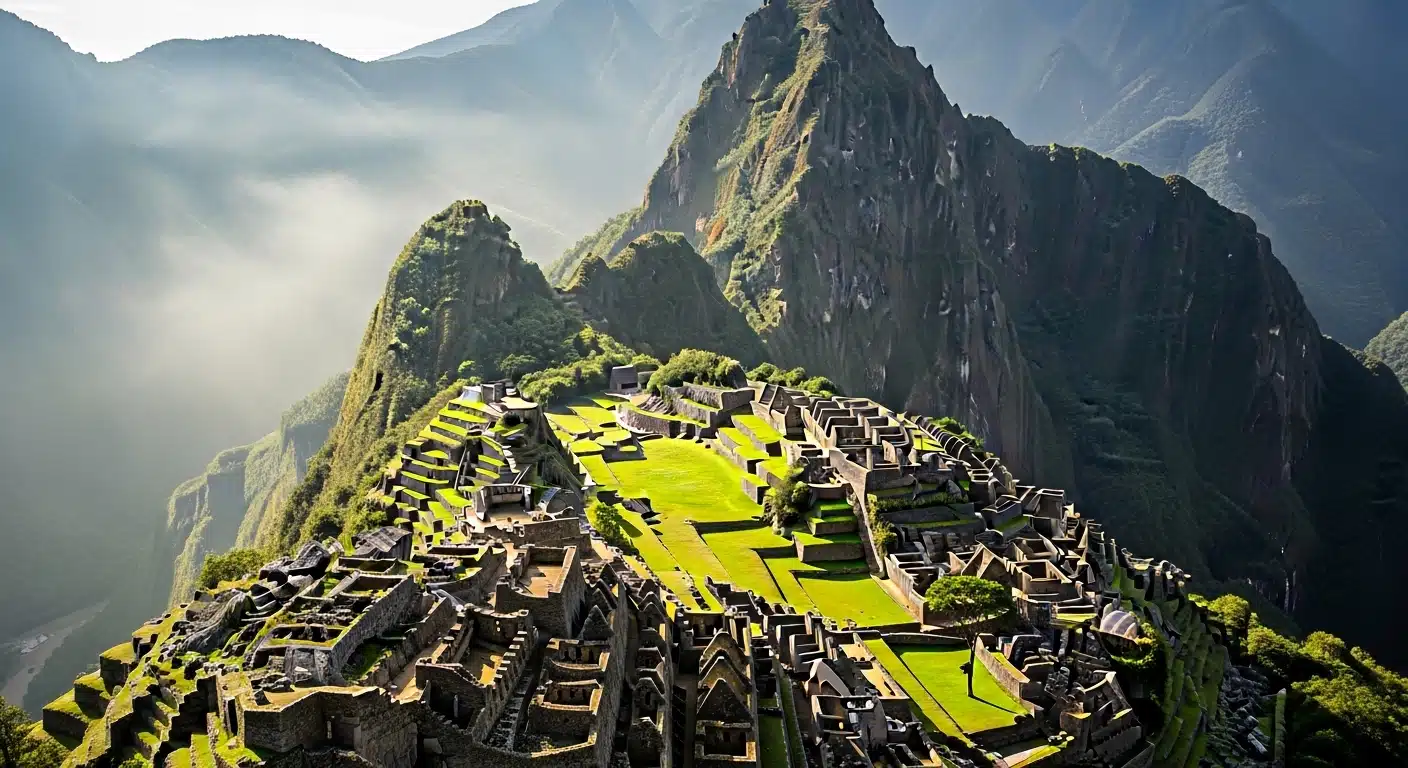
Our knowledge of one of the most enigmatic ceremonial locations associated with Machu Picchu has been revolutionized by Chachabamba Lidar. Before ascending toward the fabled fortress of Machu Picchu, Inca visitors used Chachabamba, a sacred ritual doorway that has been hidden beneath thick forest for generations. Archaeologists are now discovering its actual function—not as a mere ruin, but as a thoughtfully planned spiritual checkpoint—thanks to cutting-edge laser scanning technology.
This finding shows that the trip to Machu Picchu was more than just a physical one. It was a well-planned metamorphosis of the human soul.
A Sacred Site Hidden in Plain Sight
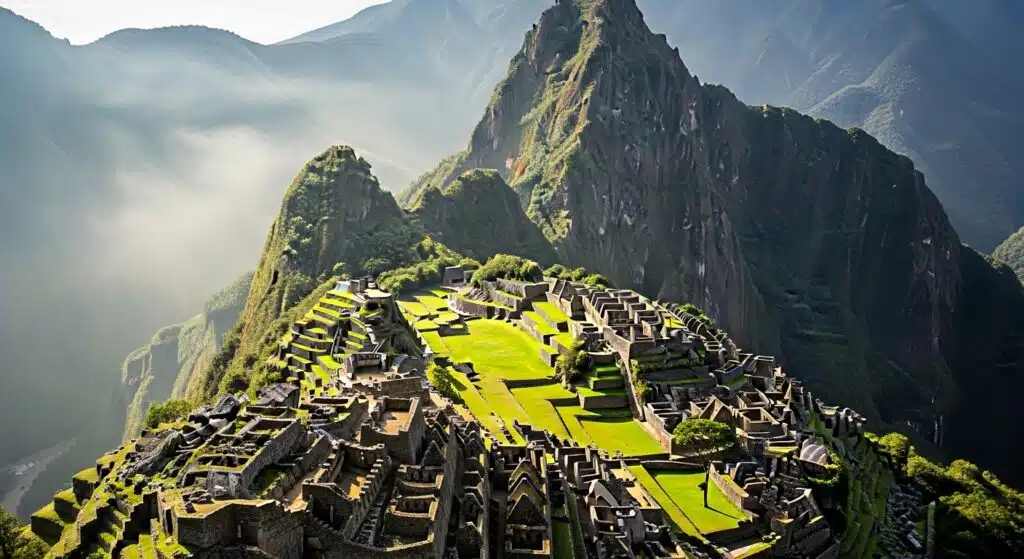
Chachabamba is situated right on the old Inca Trail that leads to Machu Picchu, in the valley of the Urubamba River. Although the site’s complete layout was hidden by dense jungle foliage, archaeologists were aware of its existence for decades. Researchers were unsure of its significance because all that was visible were pieces of water channels and stone walls.
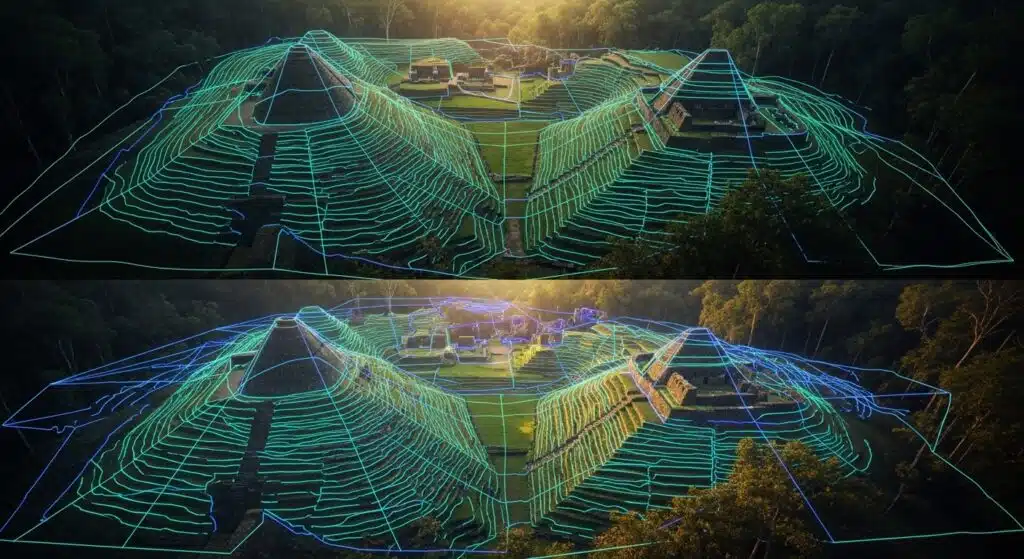
When Chachabamba Lidar scans broke through the thick jungle canopy, everything was different. Light Detection and Ranging, or LiDAR for short, maps the ground beneath vegetation with a remarkable level of accuracy using aerial lasers. A full ceremonial complex that had been concealed for more than 500 years was revealed, complete with plazas, water courses, and ritual baths.
The findings supported the long-held suspicion of many historians that Chachabamba was not a settlement. It was a hallowed place of purification.
The Ritual Baths: Cleansing Before Entering the Sacred City
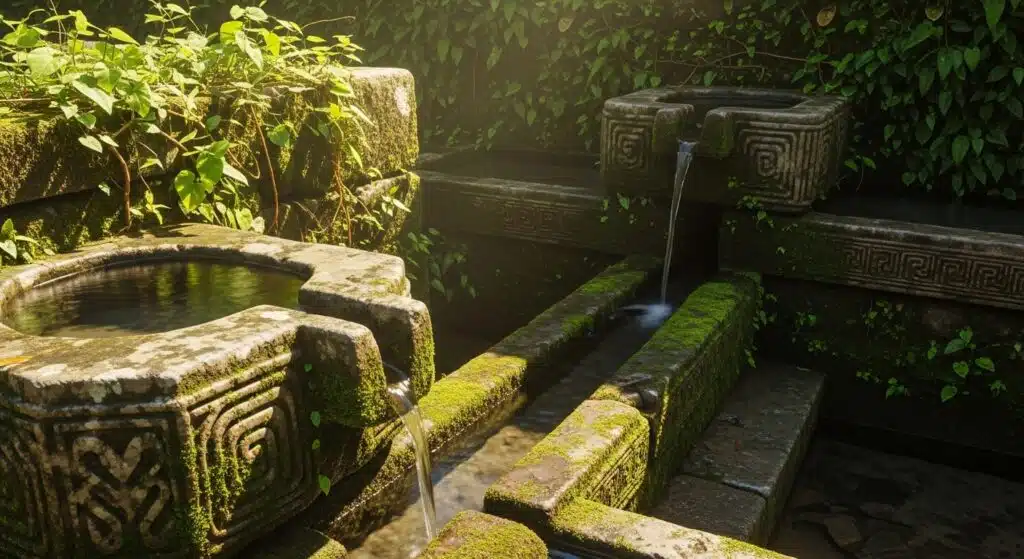
At the heart of Chachabamba lies a series of finely constructed ritual baths. These stone basins were fed by natural mountain springs, carefully channeled through carved stone canals. Water flowed continuously, symbolizing purity, renewal, and spiritual cleansing.
For the Inca, water was not merely a physical necessity. It was sacred.
Before entering Machu Picchu, pilgrims likely stopped at Chachabamba to wash away spiritual impurities. This ritual cleansing prepared them to enter what the Inca believed was a divine city—one aligned with cosmic forces, mountains, and celestial events.
The Chachabamba Lidar data revealed the baths were positioned with intentional symmetry, reinforcing their ceremonial function rather than practical use.
This was not a place to live. It was a place to transform.
LiDAR Technology: Time-Perceiving
Although LiDAR has transformed archaeology globally, its use at Chachabamba has been especially eye-opening. The entire site would have taken decades to uncover using conventional excavation techniques. Instead, the entire complex was mapped in a matter of days using LiDAR scans.
The scans showed:
- Secret passageways that link ceremonial platforms
- Terraces utilized for ceremonial meetings that were previously unknown
- Expertly designed subterranean water channels
- Sacred alignment with the nearby peaks of mountains
These findings demonstrate that Chachabamba was not a standalone building but rather a thoughtfully integrated gateway that was part of a broader spiritual journey.
The location’s direct connection to the primary pilgrimage path leading to Machu Picchu was also disclosed by the Chachabamba Lidar discoveries.
This confirms that pilgrims did not randomly wander into Machu Picchu. They were guided through stages of preparation.
The Inca Spiritual Journey: More Than a Physical Climb
To the Inca civilization, mountains were living gods known as “Apus.” Machu Picchu itself was built as a sacred royal estate aligned with these powerful spiritual entities.
Chachabamba served as the first stage of initiation.
Pilgrims arriving here would:
- Cleanse themselves in sacred water
- Participate in rituals led by priests
- Prepare mentally and spiritually
- Leave behind their former identity
Only after this purification could they continue toward Machu Picchu.
This implies that Machu Picchu was more than just a political hub. For those who successfully underwent a spiritual metamorphosis, it was a hallowed location.
The line separating the sacred realm from the everyday world was known as Chachabamba.
Mastery of Engineering Beneath the Jungle
The accuracy of the Incas’ engineering is among the most astounding features that Chachabamba Lidar has uncovered. Exact slopes were used in the design of the water channels to ensure steady flow and prevent erosion.
Many waterways continue to operate during periods of high rainfall even after centuries.
This demonstrates:
- Advanced hydrological knowledge
- Long-term environmental planning
- Spiritual and engineering integration
The Inca did not separate religion from science. Their engineering served both practical and sacred purposes.
Every stone, every channel, every alignment had meaning.
Why This Finding Modifies How We View Machu Picchu
Machu Picchu has been largely considered a royal estate or administrative headquarters for more than a century. Chachabamba Lidar, however, demonstrates something more profound.
It attests to the fact that Machu Picchu was a component of a wider network of ceremonies.
Pilgrims were led by this network through several phases of spiritual preparation. The first gateway was Chachabamba, where people entered a sacred area after symbolically leaving behind their former selves.
As a result, Machu Picchu becomes the last stop on a spiritual journey rather than a static place.
It was never intended for everyone.
The transformed were the intended audience.
A Gateway Rediscovered After 500 Years
The Chachabamba Lidar discovery reminds us that even the most studied civilizations still hold secrets. Beneath the jungle canopy, hidden in silence for centuries, lay a gateway once crossed by pilgrims seeking connection with divine forces.
Today, technology has allowed us to see what human eyes could not.
Chachabamba stands as proof that the Inca were not only master builders but also masters of spiritual architecture.
Their cities were not just places to live.
They were places to become something greater.
And thanks to Chachabamba Lidar, the first step of that transformation has finally been rediscovered.
Discover Egypt’s Latest Royal Tomb Discovery
Another major archaeological breakthrough has also emerged in Egypt. The recently uncovered tomb of Thutmose II is being called the most important royal discovery since Tutankhamun in 1922. Read more here: