

Late Roman Army Decline: The Hidden Conscription Crisis
Late Roman Army Decline: The Conscription Conspiracy Explained
Late Roman Army Decline wasn’t just about barbarian invasions or battlefield defeats—it was something quieter, more uncomfortable, and far more dangerous. Beneath the surface of the empire, a slow internal shift was taking place: the very system that once filled Rome’s legendary legions was breaking down.(Late Roman Army Decline)
And according to both ancient sources and modern historians, part of that collapse may have been deliberately hidden.
Not by enemies.
But by Rome’s own elite.
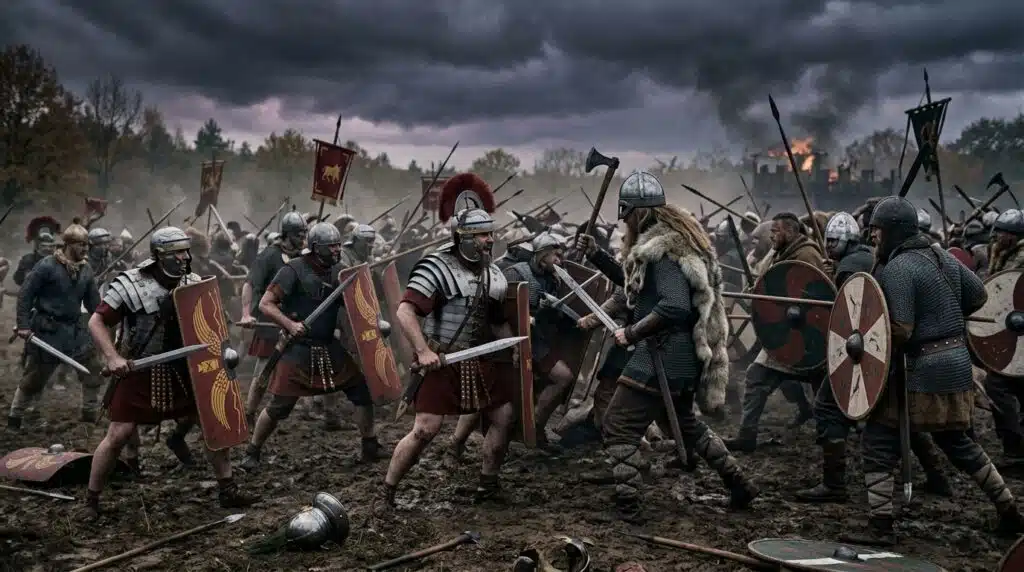
When Rome Stopped Wanting to Fight
Military service was an obligation linked to identification in the early Republic and the early Empire. Roman citizens enlisted in the army not only out of obligation but also to achieve prestige, honor, and land.
However, something had changed by the third and fourth centuries of the common era.
It became less appealing to serve in the army. The empire was now defending itself rather than growing. Rewards were less guaranteed, campaigns were longer, and dangers were greater.
In the meantime, wealthy people’s lives had improved.
And gradually, the gap between those who could serve and those who did started to widen.
The Rise of Forced Conscription
As voluntary enlistment declined, Roman authorities turned increasingly to conscription, forcing men into military service.
Laws were passed requiring landowners to supply recruits. In some cases, entire communities were responsible for providing soldiers to meet imperial quotas.
But here’s where the problem began.
The system depended on honesty.
And honesty became negotiable.
Late Roman Army Decline
How the Elite Avoided Service
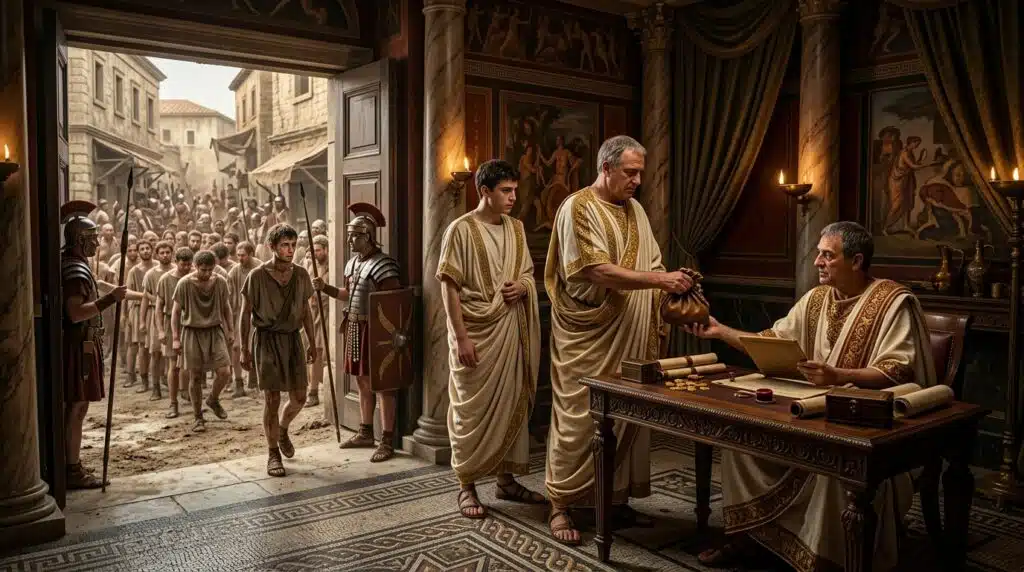
Evidence from late Roman legal texts, especially the Codex Theodosianus, shows repeated attempts by the government to crack down on draft evasion.
Why?
Because it was widespread.
Wealthy landowners found ways to avoid sending their own sons or valuable workers into the army. Instead, they would:
- Send substitutes (often poorer individuals)
- Bribe officials to ignore quotas
- Hide eligible recruits from census records
- Declare workers as “essential” to avoid conscription
This created a system where the burden of military service fell increasingly on the lower classes.
And over time, that imbalance had consequences.(Late Roman Army Decline)
A Reduction in Soldier Quality
The Roman army’s makeup altered, but it didn’t fall apart suddenly.
Legions in the past were composed of disciplined, well-trained citizen-soldiers who had a close bond with Rome. However, armies became increasingly diverse throughout the latter empire:
- More new hires with little training
- A greater dependence on non-citizen soldiers
- Increased employment of allied barbarian factions fighting under their own leaders, known as foederati
It’s crucial to understand that barbarian soldiers weren’t naturally weaker. Many were expert fighters.
However, the change signified something more profound.
The Roman army was no longer a cohesive organization.
It was starting to break apart.
The State Tries to Fix the System
Emperors like Diocletian and Constantine the Great recognized the growing military problem and attempted reforms.
They expanded the army, reorganized units, and tried to strengthen recruitment systems.
But structural issues remained:
- Corruption at local levels
- Resistance from elites
- Economic strain is limiting state resources
Even strict laws could not fully enforce conscription if those enforcing the laws were part of the same elite class benefiting from avoidance.
The Duty’s Psychological Collapse
The psychological component of the Late Roman Army Decline is one of the most neglected.
Rome’s early military might was based on a common conviction:
It was everyone’s duty to defend Rome.
That belief had waned by the end of the empire.
Serving in the military became something to be avoided rather than welcomed.
Furthermore, a society risks losing more than just control when it starts to outsource its own defense, whether to allies, mercenaries, or marginalized groups.
Identity loss is a risk.
Did the Elite “Hide” the Legions?
The idea of a “conscription conspiracy” doesn’t mean there was a secret meeting where elites planned Rome’s decline.Late Roman Army Decline
It was more subtle.
More human.
More dangerous.
A system in which:
- There were laws, but they weren’t applied consistently.
- Some were able to avoid responsibility because of their power.
- Without opposition, burdens moved downward.
The legions were therefore not physically concealed.
Socially, they were hollowed out.
Rome still had troops on paper.
The structure that had once given them power was really deteriorating.
External Threats Meet Internal Weakness
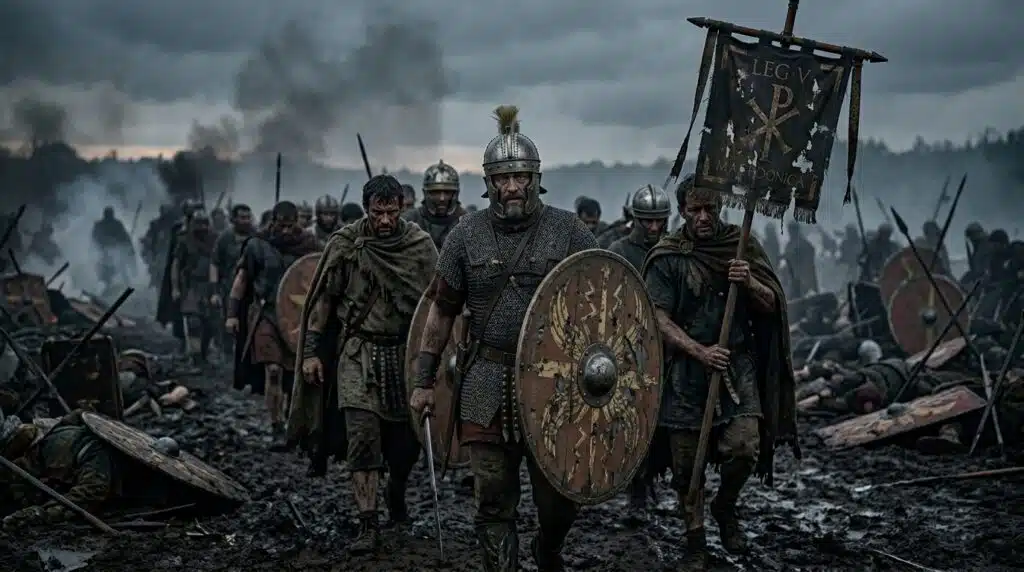
By the 4th and 5th centuries CE, Rome faced increasing pressure from groups like the Goths and the Vandals.
These were not just random invaders—they were organized, mobile, and often familiar with Roman tactics.
When they met Roman forces, the outcome was no longer guaranteed.
Not because Rome had no soldiers.
But because its military system was no longer what it used to be.
A System That Looked Strong—Until It Wasn’t
One of the most dangerous things about the Late Roman Army Decline is that it wasn’t immediately visible.
Rome still had:
- Forts
- Commanders
- Uniforms
- Official structures
From the outside, it looked intact.
But internally, the balance had shifted.
And when pressure finally came—economic, political, and military- the cracks widened quickly.
The Real Lesson Behind the Decline
The fall of Rome is often blamed on external forces.
But stories like this reveal something deeper:
Empires don’t fall just because of enemies.
They fall when internal systems stop working fairly.
When responsibility becomes optional for some and unavoidable for others.
When the structure still stands—but the foundation is compromised.
Reverberations in the Contemporary World
The “conscription conspiracy” theory is not limited to antiquity.
It poses issues that are still relevant today:
Who is responsible for the country’s defense?
Are duties distributed fairly?
What happens if systems incentivize avoidance yet depend on compliance?
Rome did not fall apart overnight.
It came apart.
And a portion of that disintegration started when fewer individuals were eager to serve in the legions, which were once the glory of the empire, and even fewer were obliged to do so.
Discover a Hidden Maya City
Deep in Mexico’s jungle, LiDAR has revealed a massive lost city of 30,000 people—reshaping everything we know about Maya civilization.
In 2024, a team of archaeologists made a discovery that could change everything: they found a lost city beneath the pyramids.