7 Dark King Tut Opium Secrets Hidden Inside Egypt
King Tut Opium theories have fascinated archaeologists for decades because they touch on one of the strangest questions in ancient history:
Did the ancient Egyptians use narcotics not just as medicine… but as part of royal life itself?
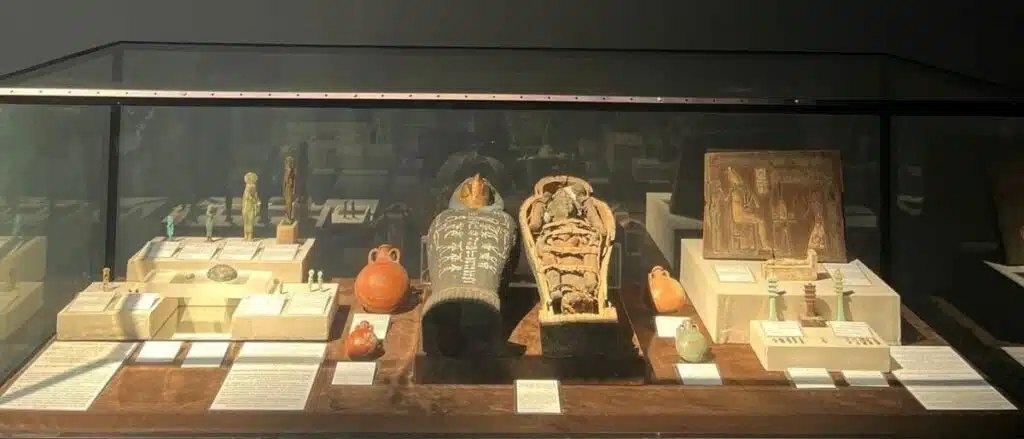
Inside the tomb of Tutankhamun, archaeologists uncovered hundreds of objects linked to healing, ritual, and daily survival. Among them were small jars, ointment containers, and residue-filled vessels that sparked intense debate among researchers studying ancient Egyptian medicine.
Some scientists now believe certain substances connected to the young king may have included ingredients derived from the opium poppy.
And if true, the implications are extraordinary.
Because the story of King Tut Opium isn’t just about drugs.
It’s about pain, ritual, medicine, and how one of history’s most advanced civilizations tried to control suffering long before modern science existed.
The Discovery Hidden Among Tutankhamun’s Treasures
When Howard Carter opened Tutankhamun’s tomb in 1922, the world focused on gold.
The mask.
The jewelry.
The treasures.
But deeper inside the burial chambers were less glamorous objects that fascinated medical historians far more:
- Small alabaster jars
- Residue-coated vessels
- Oils and ointment containers
- Medical tools and herbal substances
Many of these containers once held compounds used for healing or ritual preparation.
And some researchers began noticing similarities between certain residue traces and substances linked to ancient opium use.
That’s where the King Tut Opium debate truly began.
Did Ancient Egyptians Know About Opium?
The opium poppy (Papaver somniferum) was already known in parts of the ancient Mediterranean world long before Tutankhamun’s reign in the 14th century BCE. Trade routes connected Egypt with regions like Cyprus and the Levant, where poppy-related substances may have circulated. One of the strongest indications comes from unique “Base-Ring” juglets found throughout the eastern Mediterranean; these small ceramic vessels resembled inverted poppy capsules and are thought by some archaeologists to have been used to consume recreational drugs.
Long before Tutankhamun’s rule in the fourteenth century BCE, several sections of the ancient Mediterranean region were already familiar with the opium poppy (Papaver somniferum).
Trade connections linked Egypt to areas like the Levant and Cyprus, where drugs related to poppies would have been in use.
Distinctive “Base-Ring” juglets found throughout the eastern Mediterranean provide one of the best hints. Some archaeologists believe that these tiny clay containers, which looked like inverted poppy capsules, were used to convey opium-based medicines.
Numerous instances were discovered in Egyptian settings.
This does not establish the prevalence of recreational drug use.
However, it strongly implies that the Egyptians knew poppy-derived chemicals.
Why King Tut May Have Needed Pain Relief
The King Tut Opium theory became even more compelling after modern scans of Tutankhamun’s mummy revealed shocking health problems.
CT scans and genetic analysis suggest the young pharaoh suffered from:
- Bone disorders
- Malaria infections
- Foot deformities
- Chronic physical pain
- Difficulty walking
In fact, over 100 walking canes were found inside his tomb.
That detail completely changed how historians viewed Tutankhamun.
Instead of a healthy golden king, he may have been a physically fragile teenager living with constant discomfort.
And ancient medicine would have needed ways to manage that pain.
That’s why researchers began reconsidering whether medicinal narcotics may have played a role in royal treatment.
Ancient Egyptian Medicine Was Surprisingly Advanced
One major mistake people make is assuming ancient medicine was primitive.
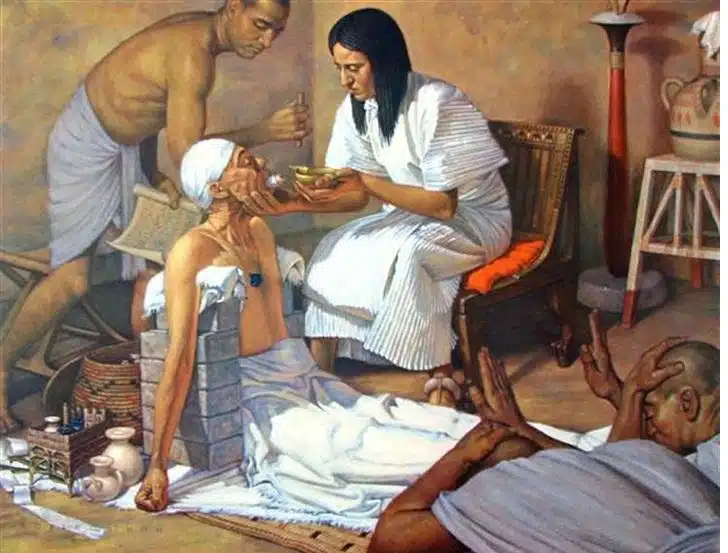
In reality, Egyptian physicians possessed impressive medical knowledge for their time.
Texts like the Ebers Papyrus describe treatments involving:
- Herbal remedies
- Sedatives
- Surgical procedures
- Pain management techniques
Egyptian healers understood that certain plants altered consciousness or reduced suffering.
Substances such as blue lotus, mandrake, and possibly opium-like compounds may have been used carefully in ritual or medicinal contexts.
The key point is this:
The King Tut Opium theory fits within a civilization already deeply familiar with pharmacology.
Medicine and Religion Were Connected
Opium-derived compounds may not have been considered “drugs” in the modern sense, but rather sacred healing substances capable of: Relieving pain; inducing sleep; assisting rituals; easing transition into the afterlife. This overlap between medicine and spirituality makes the King Tut Opium mystery even more fascinating. In ancient Egypt, healing was never purely medical; doctors frequently worked alongside priests; illness was connected to divine imbalance, curses, or supernatural forces.
It was also spiritual.
Priests and doctors frequently collaborated. Illness was associated with supernatural forces, curses, or divine imbalance.
This implied that drugs that had an impact on the body might also have ceremonial significance.
Compounds produced from opium might not have been considered “drugs” in the contemporary sense.
Rather, they might have been regarded as holy remedies that could:
- Reducing discomfort
- Getting you to sleep
- Helping with rituals
- Facilitating the transition to the afterlife
The King Tut Opium mystery is made even more intriguing by the intersection between spirituality and medicine.
The Evidence Is Still Debated
It’s important to stay historically accurate here.
No archaeologist has conclusively proven that Tutankhamun personally consumed opium regularly.
Residue analysis from ancient jars is extremely difficult because organic substances degrade over thousands of years.
Some studies suggest traces consistent with poppy derivatives.
Others argue the evidence remains inconclusive.
That means the King Tut Opium theory sits in a gray area between strong possibility and unconfirmed hypothesis.
But even cautious researchers agree on one thing:
Ancient Egypt possessed sophisticated medicinal knowledge far beyond what many people assume.
Why This Discovery Changes How We See Ancient Egypt
The King Tut Opium debate reveals something more human beneath the gold: pain, illness, fear, and attempts to heal suffering. Tutankhamun may have ruled as pharaoh, but contemporary evidence suggests he was also a young man who struggled physically in ways invisible to history for thousands of years. Like people today, his world was always looking for relief.
Golden masks, tombs, temples, and pyramids
However, beneath the wealth, the King Tut Opium argument exposes a more human side.
suffering. sickness.Fear. attempts to alleviate pain.
Even though Tutankhamun was a pharaoh, contemporary research indicates that he was still a young man who struggled physically for thousands of years in ways that history was unaware of.
His world, like those now, was always looking for solace.
The Ancient Search for Relief Never Changed
The most fascinating part of the King Tut Opium mystery is how modern it feels.
Across 3,300 years of history, humans still ask the same questions:
- How do we ease pain?
- How do we treat suffering?
- Where is the line between medicine and escape?
Ancient Egyptians did not have modern chemistry.
But they understood something timeless:
Pain changes human life.
And civilizations—even the greatest ones—will always search for ways to control it.
Somewhere inside those sealed jars from Tutankhamun’s tomb may lie evidence of that search.
Not just for healing.
But for peace itself.
Discover a Hidden Maya City
Deep in Mexico’s jungle, LiDAR has revealed a massive lost city of 30,000 people—reshaping everything we know about Maya civilization.
In 2024, a team of archaeologists made a discovery that could change everything: they found a lost city beneath the pyramids.