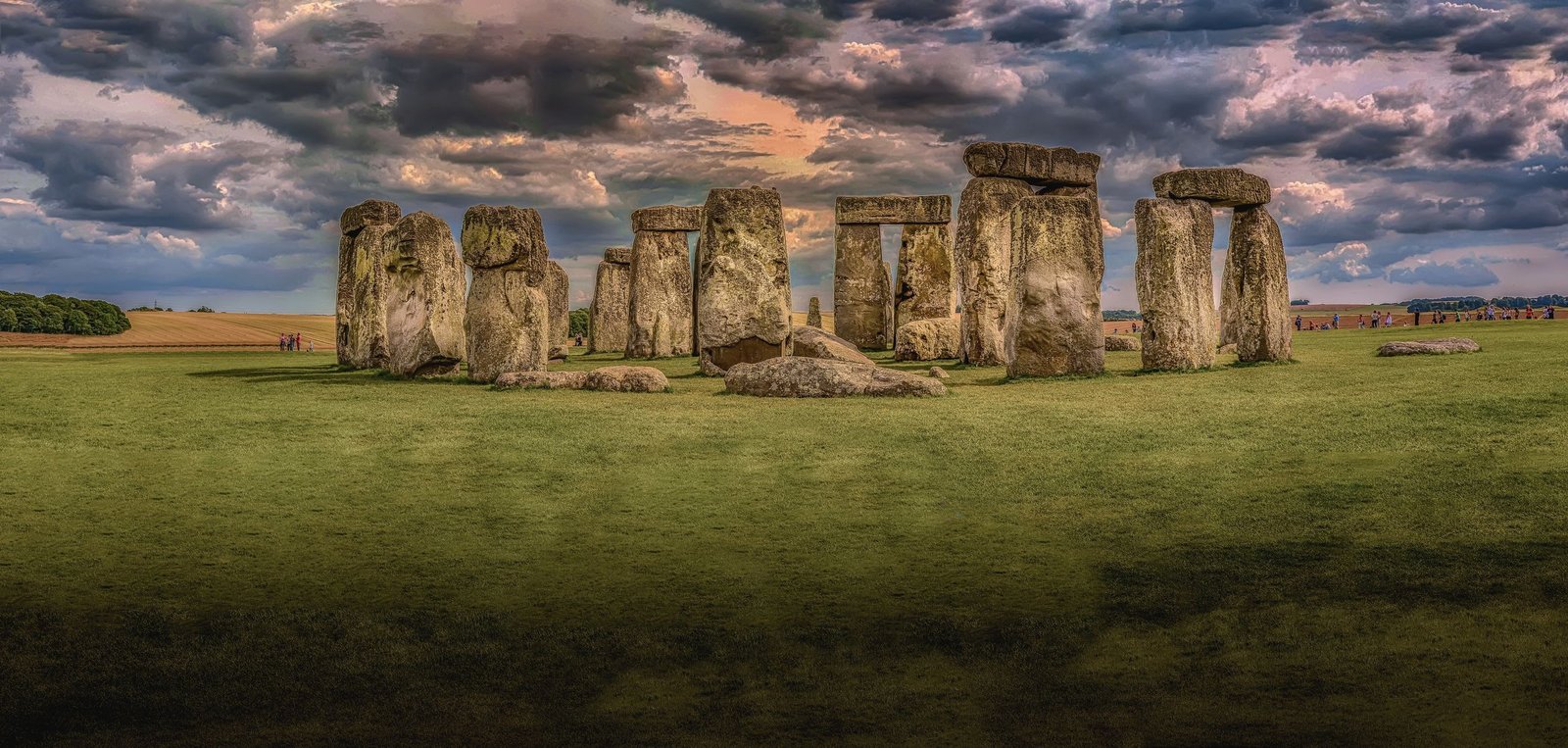
Why Was Stonehenge Built? What the Latest Science Reveals
Why Was Stonehenge Built? What the Latest Science Reveals
The Question That Never Gets Old
People have been asking why Stonehenge was built for as long as anyone can remember, which, in this case, means at least since Geoffrey of Monmouth wrote in the twelfth century that the wizard Merlin had magically transported the stones from Ireland. That answer satisfied people for several hundred years. It did not satisfy archaeologists when they arrived on the scene, and it has not stopped the question from multiplying into dozens of competing theories ever since.
The monument has been called a solar calendar, a lunar observatory, a place of healing, a site of ancestor worship, a royal burial ground, a political symbol, an acoustic instrument, and most recently, a monument to national unity built at a moment of prehistoric political crisis.
Every few years, a discovery shifts the weight of evidence, and the answer to why Stonehenge was built has to be reconsidered. In 2024 and 2025, two discoveries shifted the weight considerably. A stone whose origins had been assumed for decades turned out to come from somewhere completely different, and that single fact changed everything the most current theory about the monument’s purpose was built on.
Understanding why Stonehenge was built in 2025 requires holding several things in mind simultaneously: what is confirmed, what is plausible, what was confidently believed and recently overturned, and what the monument’s builders were almost certainly trying to accomplish in a world that left no written record of its intentions.
The Stone That Came From the Wrong Place
For decades, the received wisdom about why Stonehenge was built included a confident answer to at least one component of the puzzle: where the stones came from. The small bluestones came from the Preseli Hills in Wales. The massive sarsen stones came from Marlborough Downs. And the six-tonne slab called the Altar Stone, lying recumbent at the center of the monument, also came from Wales, probably from a similar geological formation near the other bluestones.
That last assumption turned out to be wrong. And when it fell apart, it took a significant amount of thinking about why Stonehenge was built with it and rebuilt in a considerably more interesting shape.
In August 2024, a team led by researchers at Curtin University published a study in Nature analyzing the mineral age and chemical composition of fragments from the Altar Stone. They used the chemical fingerprint of mineral grains within the sandstone, specifically the age and isotope ratios of zircon, rutile, and apatite crystals, to identify where the rock had formed geologically.
The results did not match Wales. They matched a rock formation called the Orcadian Basin in northeastern Scotland, a geological province more than 700 kilometers north of Stonehenge. The Altar Stone had not come from southwest Britain. It had come from approximately the furthest point of Britain in the opposite direction, transported to the Salisbury Plain from the extreme northeast of Scotland at a time when the wheel had not yet arrived in Britain, iron tools did not exist, and the only available transport was human muscle, rope, sledge, and possibly water.
The paper’s lead author noted that the question of why Stonehenge was built had just become more complicated: the work prompted two important questions about why and how the Altar Stone was transported from the very north of Scotland.
The answer to the second question, how, remains open. The answer to the first, why, opened a new chapter in the theory of the monument’s purpose.
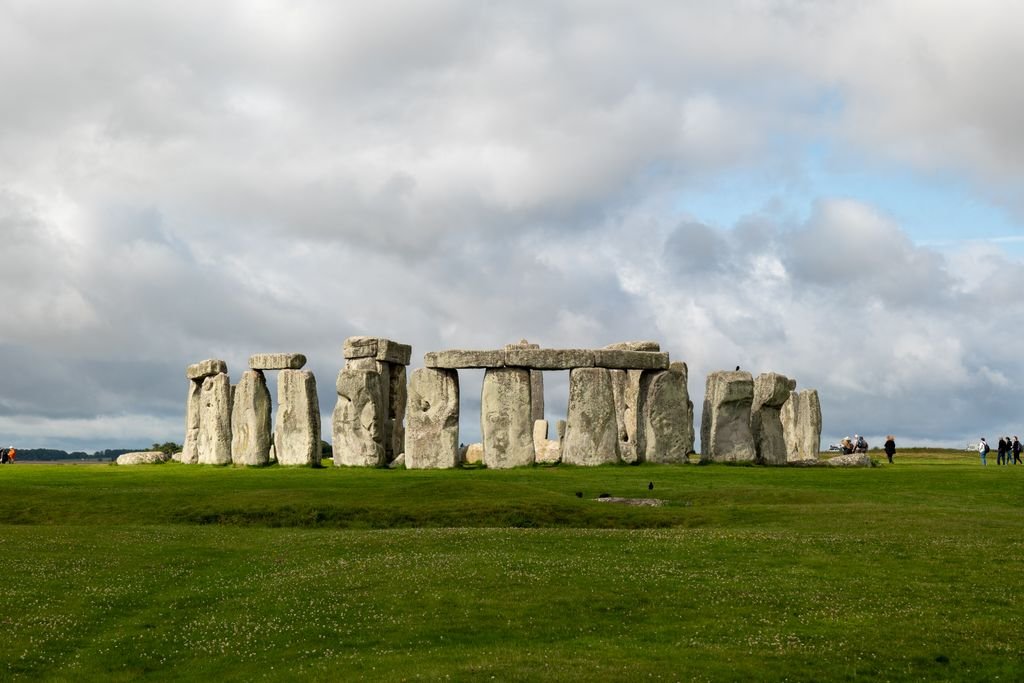
The Unity Monument: Britain’s First Political Project
Four months after the Nature study appeared, in December 2024, researchers at UCL and Aberystwyth University published a paper in Archaeology International that connected the Scottish Altar Stone to a broader theory about why Stonehenge was built.
Professor Mike Parker Pearson of UCL, who has spent decades studying Stonehenge and directed the Stonehenge Riverside Project, led the study with colleagues. Their argument began with what the stone origins meant collectively. The bluestones from Wales, 180 to 225 kilometers southwest. The sarsens from Marlborough Downs, 25 miles north. And now the Altar Stone from northeastern Scotland, 700 or more kilometers to the north.
Stonehenge was not a local monument. It was a monument that incorporated stones from the full geographic extent of Neolithic Britain. And the timing of the second major phase of construction, around 2500 BCE, coincided precisely with a period of intense cultural pressure on Britain’s indigenous Neolithic farming communities.
This second phase of Stonehenge’s construction was marked by significant cultural changes. The Bell Beaker people, arriving from the Netherlands and Germany, were beginning to interact with and, in some regions, displace the Neolithic communities that had been building monuments in Britain for centuries. Archaeological evidence of Bell Beaker culture, their distinctive pottery, metalworking, and burial practices, appears in Britain from around 2500 BCE onward.
Parker Pearson and his colleagues proposed that Stonehenge’s reconstruction in this period was a response to that cultural pressure, an assertion by Britain’s Neolithic communities of their own identity, their connections to their ancestors across the entire island, and their claim to a shared tradition that predated the new arrivals. The monument was a declaration in stone that the people of Britain, from Scotland to Wales to the English lowlands, shared something that was worth celebrating and defending.
Why was Stonehenge built? In this reading: to remind everyone who the British were before the world began to change.
The Astronomical Evidence That Started Everything
Any account of why Stonehenge was built must address the solar alignments, because they remain the most physically verifiable and widely accepted element of the monument’s design intention.
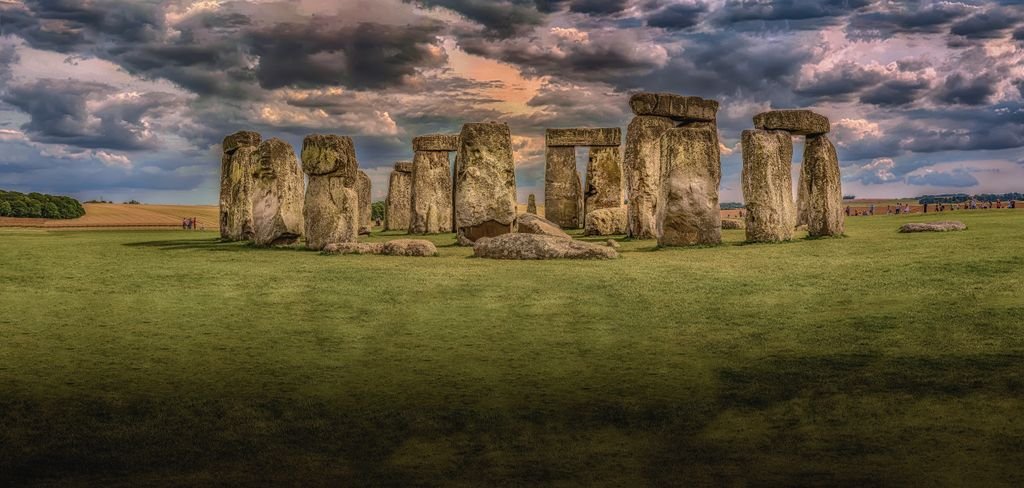
The Heel Stone, which stands outside the main stone circle at the monument’s entrance, aligns precisely with the sunrise on the summer solstice. A viewer standing at the center of the monument on the longest day of the year sees the sun rise directly over the Heel Stone. The avenue leading from the monument extends in the same alignment, suggesting the orientation was not accidental but a fundamental element of the monument’s spatial design.
The Altar Stone’s positioning adds a winter counterpart. As the UCL study noted, if you stand at the center of the stone circle on the winter solstice, the midwinter sun sets directly over the Altar Stone’s middle. The stone frames the sunset on the shortest day of the year. This positioning is described as important in understanding why Stonehenge was built in its second phase, because the winter solstice sunset was central to the feasting and ceremonial gatherings documented at the nearby site of Durrington Walls.
At Durrington Walls, approximately two miles from Stonehenge and connected to it by an ancient ceremonial avenue, archaeologists excavating the Stonehenge Riverside Project found evidence of a large settlement where thousands of people gathered during winter. The bones of pigs and cattle show they were brought from across Britain for feasting events. The Durrington Walls settlement appears to have been a gathering place for construction workers and pilgrims during the period when the monument was being built and used.
This evidence positions the answer to why Stonehenge was built within a seasonal ceremonial cycle. The monument marked the solstices. People gathered at midwinter near Stonehenge, feasted at Durrington Walls, and participated in rituals connected to the monument’s astronomical alignments. The dead were brought to the monument as the permanent stone circle associated with ancestors, while the living gathered at the nearby timber circle at Durrington Walls as its counterpart.
The People Who Were Not From Salisbury Plain
One of the most quietly remarkable findings in the evidence for why Stonehenge was built is the demographic data hidden in the bones of those buried around it.
Strontium isotope analysis of skeletal remains from the Stonehenge area, including cremated bone fragments from the monument’s ditch that are among the earliest human remains at the site, dating to around 3000 BCE, has identified a consistent pattern. Nearly half of the Neolithic people buried near Stonehenge came from somewhere other than the Salisbury Plain area. They were strangers to the land where they were interred.
Their strontium isotope ratios, which reflect the geological composition of the water and food of the region where a person grew up, suggest origins in Wales, Scotland, continental Europe, and other parts of Britain. These were not local people. They were pilgrims, migrants, or individuals whose remains were deliberately brought to Stonehenge from a distance, suggesting the monument had a significance that drew people to it from across a wide geographic range.
This finding strengthens every theory about why Stonehenge was built that positions it as a place of exceptional significance beyond its local community. Whether that significance was healing, ancestor worship, political unity, or cosmic alignment, the bone evidence confirms that Stonehenge was not a parochial monument for the people of Salisbury Plain. It was a destination that people across Britain and possibly beyond considered worth traveling to in life or being brought to in death.
The Healing Stones That Wales Gave Up Reluctantly
The transport of the bluestones from the Preseli Hills in Wales to Salisbury Plain remains one of the most discussed elements of why Stonehenge was built, because the effort required was so extreme that it demands an explanation.
Researchers Timothy Darvill and Geoffrey Wainwright proposed that the bluestones were considered to have healing properties. Their argument rested on several observations. The quarry sites in the Preseli Hills show evidence that specific stones were chosen deliberately, not quarried at random. The bluestones are made of dolerite and rhyolite, distinctive rock types that would have been visually striking and geologically alien to the Salisbury Plain. And the skeletal remains found around Stonehenge include a statistically unusual proportion of individuals with healed injuries and evidence of chronic illness, a pattern consistent with the presence of pilgrims who traveled to the site hoping for healing rather than a cross-section of the general Neolithic population.
The healing site theory for why Stonehenge was built has been described by National Geographic as the idea of a prehistoric Lourdes, a site where the special properties of the stones, combined with the rituals performed around them, were believed to offer restoration to the sick and injured. If the bluestones were credited with the healing power that made the extraordinary effort of their transport worthwhile, then Stonehenge was simultaneously an astronomical marker, an ancestral monument, and a medical pilgrimage destination, roles that were not mutually exclusive in the religious worldview of Neolithic Britain.
The Acoustic Dimension Nobody Expected
Among the stranger answers to why Stonehenge was built is the acoustic theory, which emerged from engineering research rather than archaeology.
Acoustical engineer Trevor Cox of the University of Salford built scale models of Stonehenge in its original complete configuration and tested them in laboratory acoustic chambers. The complete stone circle, with its lintels connecting the upright sarsens and the inner horseshoe of bluestones, created a distinctive enclosed acoustic space. Sound within the circle was amplified, reverberated differently than sound outside it, and created an environment that Cox described as significantly different from standing in the open air on Salisbury Plain.
This acoustic distinctiveness would have been immediately noticeable to anyone who stood inside the monument during a gathering. Voices sounded different. Music or chanting would have resonated in ways that felt qualitatively supernatural to people who had no framework for understanding architectural acoustics. Artnet News covered research suggesting that Stonehenge was built to amplify sound during ancient ruling-class rituals, describing the monument’s potential function as a ceremonial space specifically designed to create an aural experience that enhanced the authority and supernatural aura of whatever rituals took place within it.
The acoustic theory does not replace the astronomical or political theories for why Stonehenge was built. It supplements them. A monument that aligned with the solstices, incorporated stones from across Britain, drew pilgrims seeking healing, and also created a dramatically different sonic experience from its surrounding landscape would have been an extraordinarily powerful place in the cognitive universe of Neolithic Britain.
What the Bell Beaker People Changed
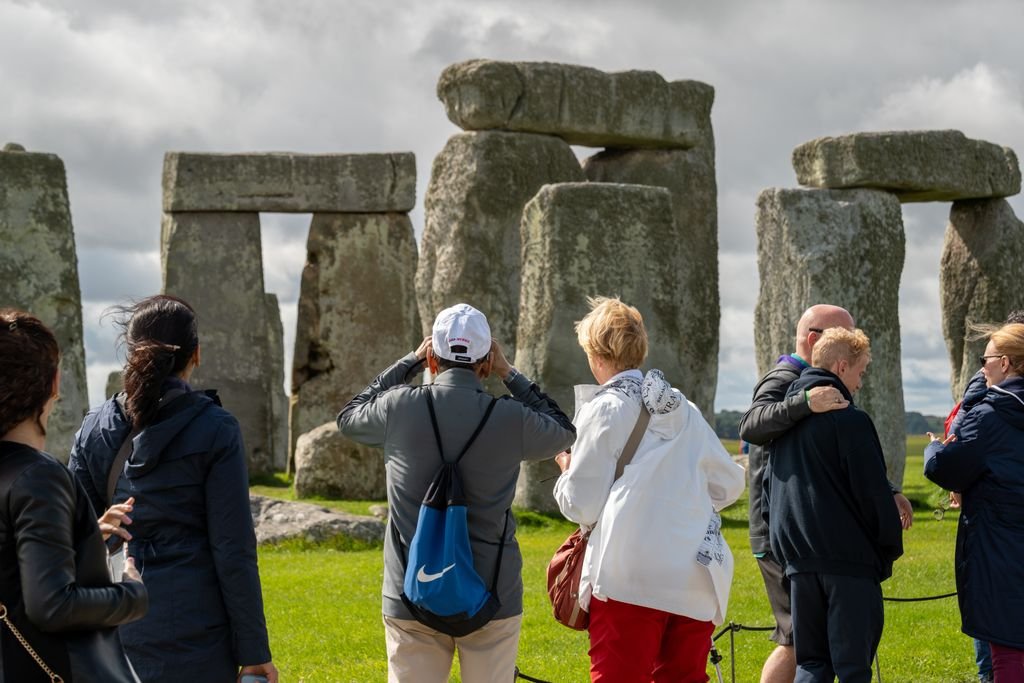
The arrival of the Bell Beaker people from continental Europe around 2500 BCE is the demographic event that the most recent scholarship uses as the context for why Stonehenge was built in its second, more ambitious form.
Population genetics research has confirmed that the Bell Beaker migration was not merely a cultural exchange. Over the following centuries, the genetic profile of Britain changed substantially, with Bell Beaker ancestry replacing a significant proportion of the pre-existing Neolithic population in many regions. Britain’s indigenous farming communities were under real demographic pressure from people who brought different pottery styles, different burial practices, different metal objects, and eventually different languages.
Parker Pearson’s theory for why Stonehenge was built in its second phase places the monument in this context as a political response by the existing population. The incorporation of the Scottish Altar Stone alongside Welsh bluestones and local sarsens was a deliberate act of gathering Britain’s diversity into a single sacred space, creating a monument that stood for connections between regions and peoples that extended across the entire island.
The study noted with a certain poignancy that despite the monument’s apparently unifying purpose, Stonehenge ultimately failed to prevent the cultural and demographic transformation that the Bell Beaker arrivals brought. The communities that built it were absorbed into the new population over the following centuries. But the monument they built to declare their unity outlasted the unity itself, and continued to mark the solstices and draw visitors long after the people who built it had become part of a different Britain.
Conclusion: Multiple Answers to One Ancient Question
Why Stonehenge was built has never had a single answer, and the evidence accumulated in 2024 and 2025 confirms that it should not.
A monument built in multiple phases over five centuries, incorporating stones transported from distances that seem impossible by contemporary standards, aligned with the most significant astronomical events of the year, drawing people from across Britain to gather at its feet for feasting and ceremony, and positioned at the center of a ritual landscape that included timber circles, burial mounds, and ceremonial avenues, cannot be reduced to one function or one purpose.
Why was Stonehenge built? Because a people under pressure from an unfamiliar world needed to remind themselves who they were. Because the stones of Scotland and Wales and the local sarsen plain could be assembled into a declaration of shared identity that spoke across the differences of distance and dialect and regional tradition. Because the midwinter sun needed a place to set that carried meaning. Because the sick came hoping for healing and the dead came to be near the ancestors. Because the stones created a sound inside them that felt like standing in the presence of something larger than ordinary human life.
Why Stonehenge was built is not a question with one answer. It is a question with many, and the monument itself held them all simultaneously for the five centuries it was actively being built, used, and transformed.
The most recent research has not simplified that answer. It has deepened it. And the Scottish stone lying at the center of an English monument, carrying a chemical fingerprint from a rock formation 700 kilometers away, is still asking questions that archaeology has not finished answering.
Quick Answer: Why Was Stonehenge Built
Why was Stonehenge built according to current archaeological evidence?
No single universally accepted answer exists to why Stonehenge was built, but the most current and evidence-supported theory, developed by UCL and Aberystwyth University researchers and published in Archaeology International in December 2024, proposes that Stonehenge was a monument of political and cultural unity built by Neolithic British farming communities during a period of increasing contact with newcomers from continental Europe. The discovery in August 2024 that the six-tonne Altar Stone came from northeastern Scotland rather than Wales, published in Nature, supported this interpretation by showing that Stonehenge incorporated stones from across the entire length of Britain, not just one region.
When was Stonehenge built and who built it?
Stonehenge was built in at least two major phases. The first phase, around 3000 BCE, involved construction of an earthwork enclosure and possibly the first standing stones, including the smaller bluestones from the Preseli Hills in Wales. The second major phase, around 2500 BCE, saw the installation of the massive sarsen stones from Marlborough Downs 25 miles away, the repositioning or addition of bluestones, and the placement of the Altar Stone from northeastern Scotland. Both phases were built by Neolithic peoples of Britain, with the second phase coinciding with the arrival of the Bell Beaker people from the Netherlands and Germany.
What is the acoustic theory for why Stonehenge was built?
Acoustical engineer Trevor Cox of the University of Salford studied the monument’s sound properties using scale models in laboratory settings and found that the original complete stone circle would have created a distinctive acoustic environment, amplifying sounds within the circle, creating reverberation and echo effects, and producing an enclosed sonic space quite different from the open Salisbury Plain outside the stones. The acoustic properties may have made the monument suitable for ritual gatherings where the special sound environment contributed to the ceremonial experience.
What evidence supports the healing site theory for why Stonehenge was built?
The healing site theory, proposed by researchers including Timothy Darvill and Geoffrey Wainwright, rests on the bluestones specifically. The bluestones were transported approximately 180 to 225 kilometers from the Preseli Hills in Wales under extraordinary effort, implying they were considered to have exceptional properties. Prehistoric quarry sites in Wales show evidence of deliberate stone selection. Additionally, skeletal remains found around Stonehenge include a high proportion of individuals with healed injuries and signs of serious illness, which some researchers interpret as pilgrims who traveled to the site seeking healing. Nearly half of all Neolithic people buried near Stonehenge came from somewhere other than the Salisbury Plain area.
Discover a Hidden Maya City
Deep in Mexico’s jungle, LiDAR has revealed a massive lost city of 30,000 people—reshaping everything we know about Maya civilisation.
In 2024, a team of archaeologists made a discovery that could change everything: they found a lost city beneath the pyramids.
Click below to watch the full story:
https://www.youtube.com/@EchoesofAntiquity-egypt/videos
Sources
- Nature (August 14, 2024) — Anthony J.I. Clarke, Christopher L. Kirkland et al., Curtin University, “A Scottish provenance for the Altar Stone of Stonehenge.” Nature 632, 570-575. DOI: 10.1038/s41586-024-07652-1 — nature.com
- UCL News (August 14, 2024) — “Stonehenge Altar Stone came from Scotland, not Wales” — ucl.ac.uk
- UCL News (December 20, 2024) — “Stonehenge may have been built to unify the people of ancient Britain” (Parker Pearson, Archaeology International study) — ucl.ac.uk
- CNN (December 19, 2024) — “Stonehenge may have been rebuilt to unify Britain’s population thousands of years ago, scientists say” — cnn.com
- Archaeology Magazine Online (December 22, 2024) — “Stonehenge may have been built to unite early British farming communities” — archaeologymag.com
- Popular Science (December 2024) — “Archeologists think they solved a 4,500-year-old Stonehenge mystery” — popsci.com
- Science News (August 2024) — “Stonehenge’s mysterious Altar Stone had roots in Scotland” — sciencenews.org
- Phys.org (August 14, 2024) — “Stonehenge’s Altar Stone origins reveal advanced ancient Britain” (Curtin University press release) — phys.org
- Science Daily (August 14, 2024) — “Stonehenge’s Altar Stone Traced to Scotland” — sciencedaily.com
- National Geographic — “Scientists Try to Crack Stonehenge’s Prehistoric Puzzles” (healing theory, Parker Pearson, Stonehenge Riverside Project, Durrington Walls feasting) — nationalgeographic.com
- Artnet News — “7 Times Scientists Thought They’d Finally Cracked the Mystery of Stonehenge” (acoustic theory Trevor Cox, University of Salford) — news.artnet.com
- Ancient Origins (August 2024) — “Stonehenge’s Altar Stone origins reveal advanced ancient Britain” — ancient-origins.net
- Atlas Obscura — “Stonehenge’s Central Rock Came from Northern Scotland” (Bevins geochemical analysis context) — atlasobscura.com
- Wikipedia — “Stonehenge Riverside Project” (Parker Pearson conclusions, Bell Beaker evidence) — en.wikipedia.org
- Wikipedia — “Waun Mawn” (2024 Holocene study challenging lost circle-Stonehenge connection, Brian John reexamination) — en.wikipedia.org